Garage door openers
Repair or replace, drive types, and what to specify for the heat an opener actually hangs in here.
The opener pageCalifornia · Law and compliance
Battery backup has been required on residential garage door openers in California since 1 July 2019. Most people have heard that much. Far fewer have heard the part that decides whether your opener is included in your next door purchase.
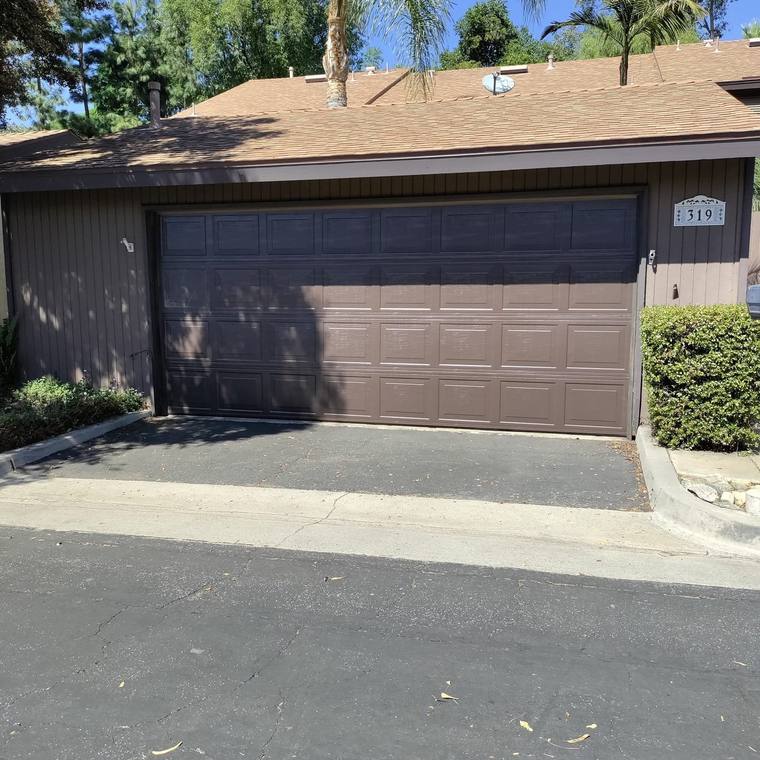
California requires every automatic residential garage door opener to have a battery backup, under Health and Safety Code section 19892, in force since 1 July 2019. The requirement covers openers manufactured for sale, sold, and installed in the state. The clause that catches people is section 19892(c): a replacement residential garage door may not be connected to an existing opener that does not meet the battery-backup requirement, and a civil penalty applies per non-compliant opener. In practice that means if you are buying a new door and your opener predates the rule, the opener is part of the job whether you planned it or not. This is separate from the federal safety rule that has required entrapment protection — the photo-eyes near the floor — on openers manufactured since 1 January 1993. The two get confused constantly, and an opener can satisfy one and not the other. Nothing here is legal advice; where the stakes are real, ask your building department or your attorney.
Call (951) 232-9778 Monday–Saturday, 8am–6pm · Closed Sunday
What this guide covers
If you only want to know whether your own opener complies, jump to the five-step check. If you are about to buy a door, read the replacement clause first — it is the part that changes the quote.
The statute, in plain terms
It is short, it is specific, and it does three separate things.
The requirement sits in California’s Health and Safety Code at section 19892, added by legislation that took effect on 1 July 2019. The reason it exists is not obscure: during power outages, people have been trapped in garages by doors they could not open, and some of those cases were fatal during wildfire evacuations. A backup battery means the door still opens when the power does not.
The first thing it does is govern manufacture and sale. Automatic residential garage door openers manufactured for sale, or sold, in California must have a battery backup function. That is why every new unit you can buy here has one, and why the question almost never comes up on a new-build house.
The second thing it does is govern installation. A non-compliant opener may not be installed in a residence in this state. Again, straightforward, and largely handled by the fact that the compliant units are what is on the shelf.
The third thing is the one that matters to somebody who already owns a house, and it is the part that is almost never mentioned. Section 19892(c) provides that a replacement residential garage door may not be connected to an existing opener that does not meet the battery-backup requirement. A civil penalty applies for each non-compliant opener. We are not going to publish the figure — the site publishes no figures at all — but the existence of a penalty is the point.
Read those three together and the practical shape emerges. If you never touch anything, an old opener on an old door is not something the statute reaches out and acts on. The moment you replace the door, the opener comes into scope.
This is a description of what the statute requires, written by a garage door company rather than by a lawyer. It is not legal advice, and if your situation has real consequences attached — a sale, a tenancy, an insurance question — ask somebody qualified to advise on it.
Next step
Most people only find out about the battery-backup rule when a quote changes. Find out now instead.
Three quick questions narrow it down before you talk to anyone.
(951) 232-9778Mon–Sat · 8am–6pmThe part that changes a quote
Every national buying guide treats the opener as an optional accessory decision. In this state, on a replacement door, it is not.
If your existing opener has no battery backup, a new door may not be connected to it. So the opener is not a separate purchase you can defer to next year — it is part of the scope of the door job.
The reason this stings is timing. People get three quotes for a door, choose one, and only then discover that one of the three included an opener and the other two did not. That is not necessarily anyone being dishonest; it is a question that does not get asked unless somebody knows to ask it.
Ask every supplier directly: does your quote include bringing the opener into compliance, or not? What the opener choice actually involves is a separate question, and worth having separately.
It does not mean an old opener is illegal to own or to keep using. If you are not replacing the door, the statute is not requiring you to retrofit anything.
It does not mean a working opener has to be thrown away for the sake of it. Where a unit already has a functioning battery backup, it can stay, and on a like-for-like door of similar weight that is often the right answer.
And it does not mean the door itself is regulated by this section. This is a rule about the operator. The door is governed by other things entirely — and by whether your job needs a permit, which is a different question with a different answer.
This is the single most common way a garage door quote moves after it has been given, and it is entirely avoidable. When we come out and measure, checking the opener is part of that visit: model, age, whether there is a backup, and whether it actually works. You get told then, in writing, alongside the door specification.
Finding out on installation day that the opener cannot legally be reconnected is a bad day for everybody. It is also why we will not quote a door over the phone — the opener is one of several things nobody can assess from a description.
Ten minutes, no tools
Nothing in this goes near a spring, a cable or a force setting. It is reading a label and pressing a button.
A stepladder you are comfortable on · A flashlight
Time About ten minutes, once
The battery is a consumable with a service life measured in a small number of years, not a fitting that lasts as long as the opener. A unit that was compliant when it was installed can be sitting there today with a battery that will not turn the door over. Putting the annual test on a calendar is covered in the maintenance guide — it is the one component the state actually mandates and the one nobody schedules.
Can’t tell whether yours has battery backup?
We check it at no charge when we measure, and tell you straight whether it can be upgraded or is due for replacing.
Two different things
An opener can satisfy one of these and not the other. They were made for different reasons, decades apart.
State law. Health and Safety Code section 19892, in force from 1 July 2019. It is about the door still opening when the power is out, and it was driven substantially by evacuation cases.
It applies to manufacture, sale and installation in California, and — through the replacement clause — to connecting a new door to an existing opener.
It says nothing about how the door behaves when something is underneath it.
Federal law, and much older. Residential garage door operators manufactured for sale in the United States from 1 January 1993 must have a secondary entrapment protection system — in practice the photo-eyes six inches or so off the slab — under 16 CFR 1211 and the UL 325 standard it implements.
It is about the door reversing rather than closing on a child, and it is the reason your door stops and goes back up when the beam is broken.
It says nothing about power outages.
A 1998 opener with working photo-eyes satisfies the federal rule and does not satisfy the California one. A brand-new opener with a backup battery whose photo-eyes have been bypassed by somebody trying to stop nuisance reversals satisfies the state rule and defeats the federal one.
Both matter, and only one of them is checked by anybody. If a technician disables or bypasses your photo-eyes to make a door work, that is not a repair — it is a liability moved onto you. Ask what was done to the safety system before anyone leaves, and test it yourself afterwards.
The practical version
The statute reads as one rule. What it means in practice depends entirely on what you are about to do.
| Your situation | Does the battery rule bite? | What to do about it |
|---|---|---|
| Nothing is changingOld door, old opener, both working. | NoThe statute is not requiring you to retrofit an existing installation. | Nothing is required. Worth knowing where you stand, though, because it changes the moment the door does. |
| Replacing the doorNew door, keeping the existing opener. | Yes — this is the clauseA replacement door may not be connected to a non-compliant opener. | Check the opener before you choose a door, and ask every quote whether bringing it into compliance is included. |
| Replacing the opener onlyDoor stays, new operator. | Yes, and it is automaticCompliant units are what is sold here. | Nothing to manage. A new unit will have backup whether or not you ask for it. |
| Repairing the openerGear kit, board, remote, photo-eye. | Generally notA repair is not a sale or an installation of a new unit. | Worth using the visit to establish whether the unit has backup at all, and whether it still works. |
| Selling the houseBuyer’s inspector will look at the garage. | Not directly, but it comes upInspectors note it; buyers ask about it. | Have the answer ready with the label photograph. Unknowns become negotiating points late in a sale. |
| Letting the propertyTenants, and a door they rely on. | Ask somebody qualifiedLandlord obligations are beyond what we can advise on. | This is the situation where we would tell you to take proper advice rather than take ours. |
This table is a practical summary, not a legal opinion. Where the consequences are real — a sale, a tenancy, an insurance claim — the right people to ask are your building department and your own adviser.
Questions
The six questions this comes up as, answered without the marketing.
Call and ask. There’s no charge for a question, and Beau has been doing this since 1996.
(951) 232-9778Mon–Sat 8am–6pmEvery automatic residential garage door opener manufactured for sale, sold, or installed in California has been required to have a battery backup since 1 July 2019, under Health and Safety Code section 19892.
That does not mean you must retrofit an opener you already own and are not touching. It means new units sold here have it, and it means the requirement reaches your existing unit at the point you replace the door.
Only if it already meets the battery-backup requirement. Section 19892(c) provides that a replacement residential garage door may not be connected to an existing opener that does not, and a civil penalty applies per non-compliant opener.
This is the single most common reason a door quote changes after it has been given, so establish it before you choose a door rather than after. Ask each supplier whether their quote includes bringing the opener into compliance.
Look for a sealed battery compartment on the underside or end of the motor head, and for a battery status indicator light. Then prove it: unplug the opener at the wall and operate the door once on the remote.
A working backup runs the door more slowly than usual and without the courtesy light. If nothing happens, either there is no backup installed or the battery is flat — and a flat battery is common, because it is a consumable that almost nobody puts on a schedule.
No, and they get confused constantly. The battery requirement is California law from 2019 and is about the door opening during a power outage.
The sensor rule is federal, much older, and is about the door reversing rather than closing on someone: residential operators manufactured from 1 January 1993 must have secondary entrapment protection, under 16 CFR 1211 and UL 325. An opener can satisfy one and fail the other.
It is a consumable rated in a small number of years rather than a fitting that lasts the life of the opener, so a unit that was compliant on the day it was installed can be sitting there today with a battery that will not move the door.
Test it once a year by unplugging the opener and cycling the door on the remote. If the opener is going to be unplugged for a long period — a property standing empty over a season — disconnect the battery rather than leaving it attached to a dead unit.
Section 19892 is written about residential garage door openers, so a commercial operator on a commercial building is a different question governed by different standards.
A detached residential garage is still residential. Where you are genuinely unsure which category a building falls into — a converted outbuilding, a mixed-use property — that is a question for your building department rather than for us, and they will answer it over the phone.
Further reading
Repair or replace, drive types, and what to specify for the heat an opener actually hangs in here.
The opener pageWhere the annual backup-battery test lives on the calendar, alongside the two safety tests worth running monthly.
The maintenance guideThe other thing worth settling before a door is ordered: which department covers your address, and what generally triggers a permit.
The permit guideHow we handle it
When we come out to measure a door, the opener gets looked at as part of the same visit: what it is, roughly how old it is, whether there is a backup installed, and whether that backup actually turns the door over with the power off. It takes a couple of minutes and it removes the most common late change to a garage door quote in this state.
You get told the answer then, in writing, next to the door specification — including the honest version where the opener is fine and does not need touching, which is a good proportion of the time. We would rather tell you that than sell you a unit you did not need.
The measure is free, and free whether or not you order the door from us. We cover the whole of Riverside County from one shop in Riverside, and the person who answers the phone is the person who comes out and looks at it.
Send us the make and model, or a photograph of the label on the side of the motor head, and we will tell you where you stand. If you are thinking about a new door, that is the thing worth settling first — it decides whether the opener is in the job or not.
Riverside Classic Garage Doors · 6410 Industrial Ave #3, Riverside, CA 92504 · (951) 232-9778 · Monday–Saturday, 8am–6pm · Closed Sunday