Garage door maintenance in Riverside County
The fifteen-minute check you can do yourself, and the calendar that branches six ways by climate.
The maintenance guideServicing · What you are actually buying
“Tune-up” is not a defined term in this trade. It means whatever the company offering it decides it means, and that is the reason the question is so hard to answer from an advert.
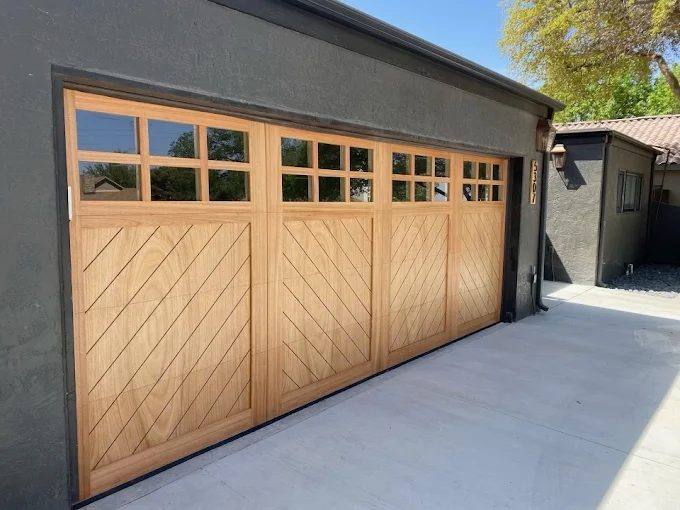
A garage door tune-up is worth it when it includes a hand balance test with the operator disconnected, a proper inspection of the springs and cables, a hardware re-torque, and both safety tests — and it is worth very little when it is a lubrication and a look. The difficulty is that “tune-up” has no agreed definition, so two services advertised with the same word can be forty minutes apart in what they actually do. The single most useful thing you can do before booking one is ask for the checklist in writing and see whether the balance test is on it. That one item separates a service that tells you something about the condition of your door from one that makes it quieter for two weeks. It is also worth being told plainly when a service is not needed — on a door under a year old, or one that has just been worked on, there is usually nothing useful to find.
Call (951) 232-9778 Monday–Saturday, 8am–6pm · Closed Sunday
What this guide covers
This page is about what should be in a service and how to tell a thorough one from a cursory one. It deliberately does not answer how often to book one — that is answered elsewhere on this site and there is no sense in three pages saying it.
Start with the word itself
There is no standard, no certification and no agreed scope behind the word. It is a marketing term, not a specification.
A car service has a manufacturer’s schedule behind it. A boiler service has a defined procedure. A garage door “tune-up” has neither. It is whatever the company offering it has decided to include, and the range between the thin end and the thorough end is genuinely large.
At the thin end, a tune-up is a can of lubricant, a look at the door, and a wipe of the tracks. It takes a few minutes, the door is quieter afterwards, and almost nothing has been established about its condition. That is not fraud — the work described was done — but it has told you very little.
At the thorough end, it is a genuine inspection: the door balance-tested by hand with the operator disconnected, both springs and both cables examined properly, the hinge, bracket and track fasteners checked and torqued, the rollers and bearings assessed, the track alignment checked along its length, both safety systems tested, and the perimeter seals looked at. That takes real time, and it produces an actual opinion about the door.
Both get advertised with the same word. So “is a tune-up worth it?” is not answerable in the abstract, and anybody who answers it yes or no without asking what is in it is guessing.
The practical move is simple and it costs you nothing: ask for the checklist before you book. A company that does the thorough version will send it without hesitation, because the checklist is the product. A company that does not will find that request awkward, and the awkwardness is your answer.
This page deliberately does not tell you how often to have a door serviced. That question is answered on our answers page and the maintenance guide sets out the calendar — there is no sense in a third page repeating it.
Next step
We’ll tell you on the phone if your door doesn’t need a service yet.
Three quick questions narrow it down before you talk to anyone.
(951) 232-9778Mon–Sat · 8am–6pmThe checklist to ask for
Take this list, ask which of it is included, and the differences between quotes stop being about the number.
| Item | What it actually tells you | How much it matters |
|---|---|---|
| Hand balance testOperator disconnected, door lifted by hand. | Whether the counterbalance still matches the door. An out-of-balance door is invisible while the opener works and dangerous the moment it does not. | The single most important item. If it is not on the checklist, the service is not an inspection. |
| Spring inspectionBoth springs, looked at properly. | Coil condition, corrosion, and whether a spring is near the end of its life. It is the component whose failure strands people. | Essential. |
| Cable inspectionBoth cables, drum to bottom bracket. | Broken strands, slack, or a cable riding badly on its drum. Cables fail from the inside out, so this needs looking at rather than glancing at. | Essential. |
| Both safety testsPhoto-eye reversal and contact reversal. | Whether the entrapment protection actually works. This is the system that stops a closing door on a child. | Essential, and you should be shown them being done. |
| Hardware re-torqueHinge, bracket and track fasteners. | Fasteners work loose on thermal cycling, and in this county that happens all year. This is the item that keeps a door running true. | High. The highest-value routine job on an inland door. |
| Roller and bearing check | Play, grit loading and flat spots. Worn rollers are what make a door hard to move, and hard to move is what wears everything else. | High. |
| Track alignment checkAlong its whole length, not just at eye level. | Whether the door is still running true. Catches a developing problem long before it becomes an off-track door. | Moderate to high. |
| LubricationCorrect product, correct parts, dry track. | Very little on its own. It is the finishing task, not the service. | Low on its own — and it is the one thing every thin tune-up includes. |
| Seal and perimeter check | Whether the door still closes to the opening. In the foothills that is also a fire-code consideration rather than only a draft. | Moderate, and higher in the desert and the interface communities. |
| A written report of what was found | That an actual assessment happened, and what to plan for. Without it you have bought an hour of somebody’s time and no information. | High. Ask for it explicitly. |
Notice which item is at the bottom. Lubrication is what a thin service consists of almost entirely, and it is the item that matters least on its own — and in the desert an over-lubricated door is actively worse, because oil in dust-laden air becomes a grinding paste.
Want this checklist done on your door?
Every item on it, the balance test done in front of you, and the findings written down.
Said carefully, and as a pattern
A cheap advertised service can be entirely legitimate. These are things to check rather than accusations, and they work in both directions.
The checklist exists and arrives before the visit. A company whose product is the inspection is happy to show you the inspection.
The balance test is on it, in words. Not “check operation” — the door lifted by hand with the operator disconnected.
A time is quoted that makes sense. Everything on that checklist cannot be done in ten minutes, and a company that says it can is telling you something.
You are offered a written report. The value of a service is the information, and information that is not written down did not happen.
You are told when you do not need one. A company that will talk you out of a booking is worth keeping.
There is a known pattern in this trade where a low advertised service price is a route to the driveway, and the commercial substance is the quote that follows. It is not universal and it is not always improper — a genuine inspection should sometimes find real faults, and finding them is the point.
What separates the two is whether the findings are evidenced. So ask, before anybody arrives:
“If you find something, will you show me the part and put the recommendation in writing?” A real finding survives that question easily. A manufactured one does not.
“Will the price of the service change on the day?” and “is the quote for any extra work separate from it?”
And when somebody does recommend work, the spring-safety guide sets out what a legitimate spring quote contains — wire size and length written down, both springs on a two-spring door, cycle rating offered as a choice.
If a technician tells you the door is out of balance and shows you — operator disconnected, door lifted by hand, and it does not stay where they put it — that is a demonstration rather than an assertion, and you can see it for yourself. It is also genuinely worth acting on, because an out-of-balance door is quietly destroying the opener and will strand somebody in a power outage.
Findings you can be shown are a completely different category from findings you are told about. Ask to be shown.
The honest half
There are several situations where the answer is simply no, and a company that never says so is not being straight with you.
The door is under a year old. Everything is new, everything is in adjustment, and a service will find nothing because there is nothing yet to find. The exception is a door that has been behaving oddly since it was installed, which is a warranty conversation rather than a service.
It was worked on recently. If somebody replaced springs or rollers in the last few months, the door was necessarily inspected and adjusted at the time. Paying for that again shortly afterwards buys very little.
You already know what is wrong. If the spring has gone or the door is off its track, a service is the wrong product — you need the repair, and the inspection is part of it. Booking a tune-up on a broken door is a wasted visit.
You are replacing the door within the year. Servicing something you have already decided to remove rarely pays for itself, beyond keeping it safe until it goes.
You do the fifteen-minute check yourself and nothing has changed. The homeowner check in the maintenance guide catches most developing problems, and a door that passes it and sounds the same as last year is not urgently asking for anybody.
The place a service genuinely earns its money is the opposite case: a door that has been in service for years, has never been looked at, and is still working. That is exactly the door where a balance test and a hardware check find something worth finding, and where the finding is cheap now and expensive later.
For a property running doors hard — a business, a fleet yard, anything cycling many times a day — the calculation is completely different and it is set by cycles rather than by the calendar. That is what a commercial service contract is for.
Questions
Six questions this comes up as, answered without a number attached.
Call and ask. There’s no charge for a question, and Beau has been doing this since 1996.
(951) 232-9778Mon–Sat 8am–6pmAt minimum: a hand balance test with the operator disconnected, a proper inspection of both springs and both cables, a hardware re-torque, a roller and bearing check, a track alignment check, both safety tests, lubrication with the right product, and a seal check — plus a written report of what was found.
If the balance test is not on the checklist, what you are buying is not an inspection. Ask for the list before you book; the company that does the thorough version will send it without hesitation.
Not necessarily, and it would be unfair to say so. A low price can simply mean a short visit that does what it says, and a genuine inspection should sometimes find real faults — that is what an inspection is for.
What matters is whether findings are evidenced. Ask in advance whether you will be shown the part and given the recommendation in writing. A real finding survives that question easily.
The hand balance test, and it is not close. Disconnect the operator, lift the door, and see whether it stays where you put it. That single test tells you whether the counterbalance still matches the door.
It matters because an out-of-balance door is completely invisible while the opener works — the motor quietly absorbs the difference and wears out early — and it becomes a real problem the moment there is a power outage and somebody has to lift it by hand.
A door that has been in service for years, has never been looked at, and still works is precisely the door where an inspection is worth having. Nothing is wrong yet, which is when findings are cheap.
A door under a year old, or one worked on recently, is the opposite case — there is unlikely to be anything to find, and we would tell you that rather than book it.
No, and anybody promising that is overselling. Springs are rated in cycles and reach the end of that rating regardless of how well the door is maintained.
What a service can do is spot a spring that is corroding or visibly deteriorating, and keep the door balanced so the springs are not working harder than they were sized for. It shifts the odds; it does not change the physics.
No, and confusing them wastes a visit. A service is an inspection and adjustment of a working door. A repair is fixing something that has failed.
If you already know the spring has gone or the door is off its track, book the repair — the inspection is part of that work anyway. Booking a tune-up on a door that is already broken means paying for somebody to tell you what you knew.
Further reading
The fifteen-minute check you can do yourself, and the calendar that branches six ways by climate.
The maintenance guideIf a service keeps finding things, the useful question changes. Four assemblies, four clocks.
The replace-or-repair guideFor doors cycling many times a day, the interval is set by cycles rather than by the calendar.
Commercial contractsSo you can compare it
The door is balance-tested by hand with the operator disconnected. Both springs and both cables are inspected properly. The hinge, bracket and track fasteners are checked and torqued. Rollers and bearings are checked for play and grit. The track is checked for alignment along its length. Both safety systems are tested, and you are shown them being tested. The moving parts are lubricated with a product suited to the environment — which in the desert means the track is cleaned and left dry rather than oiled. The seals are looked at.
You get told what was found, including when the answer is that nothing was. And if the honest answer when you call is that your door does not need this yet, that is what you will hear — it costs us a booking and it is still the right answer.
Looking at a door is free here regardless. We cover the whole of Riverside County from one shop in Riverside, and the drive band for your community is on its own page.
Tell us roughly how old the door is, when it was last looked at, and whether anything has changed in how it sounds or moves. If the answer is that it does not need a service yet, that is what you will be told.
Riverside Classic Garage Doors · 6410 Industrial Ave #3, Riverside, CA 92504 · (951) 232-9778 · Monday–Saturday, 8am–6pm · Closed Sunday