Garage door noises: what each sound means
Squeak, grind, rattle, pop or one loud bang. The sound tells you which part is failing and how soon it matters — and one of them means stop using the door today.
Read the guideRollers and tracks · Riverside County
They are running on worn steel rollers with no bearings. Swapping to sealed nylon is the cheapest single change that quietens a door, and it takes real load off the opener at the same time.
How it works
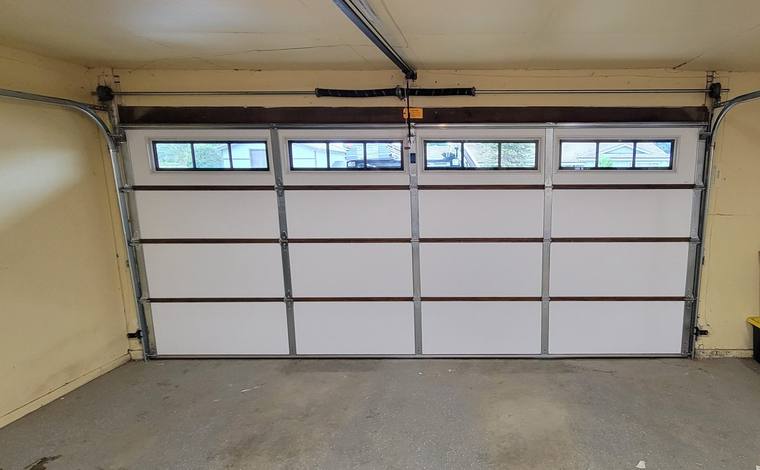
Rollers sit in the hinges along the edge of each panel and run inside vertical and horizontal tracks. Most builder-grade doors ship with plain steel rollers that have no bearings at all, because they are the cheapest part to specify.
Without bearings they wear flat, then grind, then shake the whole door. The noise people describe as the opener failing is usually ten worn rollers and a set of dry hinges.
Sealed nylon rollers cost a little more, run almost silently, and last far longer. They are the single best value upgrade on a working door.
Warning signs
Most of these give you warning. Catching one early is the difference between a scheduled visit and a door on the floor.
Stop using it if
Any of those and the door should not be operated. Running it makes a one-part job into a several-part job.
The repair
This is a scheduled job, not an emergency. If your door still works but sounds terrible, book it at your convenience rather than paying for urgency you do not need.
Nylon rollers, fresh hinges, bearings where needed and a proper lubrication. It is the cheapest visit we do and the one people notice most.
What changes afterwards
Questions
Including why we will not grease your track and why all ten rollers get replaced.
Call and ask. Beau has been doing this in Riverside County for over thirty years and there is no charge for a question.
(951) 232-9778Mon–Sat · 8am–6pmBecause a door cannot be priced down a phone line honestly. Weight, spring cycle rating, hardware age and access all change the figure, and none of them can be assessed from a description. A phone number is a guess, and guesses get revised upward on the driveway.
No. Looking at a door and telling you what it needs is not a service we bill for. There is no diagnostic fee added at the end, and the measure for a replacement is free whether or not you order one.
Stop using it and keep everyone clear. A door off its track is held by very little and can fall. Do not try to lever it back on, and do not run the opener to see if it corrects itself, because that is how a repair becomes a replacement.
Two tests, both take a minute. Lay a 2x4 flat on the floor in the door's path and close the door onto it; it should reverse on contact and go back to fully open. Use a 2x4 rather than a roll of paper towel — a roll may not compress far enough to test the system properly. Then wave a broom through the sensor beam mid-close; it should reverse again. If either fails, stop using the door.
Once a year for an average household. A service means checking spring balance, tightening hardware, lubricating rollers, hinges and bearings, and testing the safety reverse. It is the cheapest way to avoid the calls we get most often.
Most builder-grade doors ship with steel rollers that have no bearings. They wear, then grind, then shake the whole door. Swapping to sealed nylon rollers is the single cheapest change that quietens a door and takes load off the opener.
Rollers, hinges, bearings and the torsion bar, using a garage door lubricant rather than a general spray. Do not grease the track itself, because the rollers need to roll rather than slide, and a greasy track collects dust.
Yes, in two ways. Repeated expansion and contraction loosens hardware faster than in milder climates, so bolts and brackets need checking. And an uninsulated steel door on a west-facing garage radiates a lot of heat into the space behind it.
Where we do this work
Every location page carries the ZIP codes, the drive from our Riverside shop, and what actually breaks doors on those streets — because a garage door in Blythe does not live the same life as one in Eastvale.
Further reading
Worn rollers are usually the loudest part of a door, and the most common reason one comes off its track. The guides below help you tell them apart by sound, and keep new ones running true.
Squeak, grind, rattle, pop or one loud bang. The sound tells you which part is failing and how soon it matters — and one of them means stop using the door today.
Read the guideWhat to do in the next few minutes, which of three situations you’re in, and why the door left the track. The cause is usually the real repair.
Read the guideThe fifteen-minute check any homeowner can do, the things that mean stop using the door today, and six separate calendars — because the desert, the pass and the mountains do not wear a door out at the same time of year.
Read the guide