Garage door roller replacement
The fix for the most common cause of a loud door, and why every roller gets replaced at once.
Rollers and tracksRepair · Diagnosis by sound
Squeaks, grinding, rattles and pops each come from a different part, and they aren’t equally urgent. This guide goes sound by sound, so you can tell a quick fix from a door you should stop using.

A garage door usually gets loud because its rollers, hinges or bearings are dry or worn, its hardware has worked loose, or the opener’s drive is wearing out. The type of sound points to the part. A squeak or squeal is usually a dry hinge or roller bearing, and a homeowner can often cure it with a lubricant made for garage doors. Grinding usually means worn rollers, grit in the track, or a worn gear inside the opener. Rattling usually means loose fasteners or a slack opener chain. Those are worth booking, not panicking over. One sound is different. A single loud bang from the garage, after which the door feels far heavier or the opener strains and can’t lift it, is almost always a torsion spring breaking. Stop using the door, leave it closed, and have it looked at before anyone runs the opener again.
Call (951) 232-9778 Monday–Saturday, 8am–6pm · Closed Sunday
What this guide covers
Start with the one sound that means stop. Then find yours in the lookup table.
Read this first
People hear it from the kitchen and go looking for something that fell. Usually nothing fell. A spring broke.
The torsion spring above the door carries most of the door’s weight. When it breaks, the door suddenly feels far heavier. Look up at the spring from the floor, without touching it. You’ll usually see a gap where the coil has separated.
Don’t run the opener to test it. It was never built to lift the whole door, and trying can strip its gear or pull the door crooked. Leave the door closed and keep people and cars clear.
If it happened with the door open, don’t pull the red release cord. The door can come down under its own weight. Keep everyone out from under it and call us.
Why a spring isn’t a homeowner job, and how to get a trapped car out, are in our spring safety guide.
Less often, the bang is a lift cable snapping. Same advice: door closed, opener unplugged, nobody underneath.
The lookup
Find the sound, then read across. The third column is the one to act on.
| The sound | Where it usually comes from | How urgent | What you can do |
|---|---|---|---|
| Squeak or squealEvery time the door moves. | Dry hinges or roller bearings, most often. Sometimes the bearings at the ends of the spring shaft, or a side seal rubbing the door on a hot day. | Fine. Annoying, not dangerous. | Lubricate the hinges and roller bearings. If the squeal is at the ends of the spring shaft, mention it when you book. |
| GrindingA rough, gritty rumble. | Worn or dirt-packed roller bearings, or grit in the track. From the opener itself: a worn drive gear. | Book it. It gets worse, and it loads the opener. | Wipe the track clean and leave it dry. Grease holds grit in place. |
| ScrapingMetal or rubber dragging. | The door rubbing the side seal or frame, a roller sliding instead of turning, or a track knocked out of line. | Book it. Stop if the door hangs crooked or a cable looks slack. | Look for fresh rub marks. They show where to start. |
| Popping, ticking or cracking | Door still: steel moving as the sun heats and cools it. Door moving: a panel flexing in the curve, a cracked hinge, or the spring. | Usually fine when still. Book it if it pops at the same spot every cycle. | Note whether the door was moving, and where. |
| One very loud bangOften with nobody near the door. | A torsion spring breaking. Less often, a lift cable snapping. | Stop using the door. | Leave it closed. Don’t run the opener. |
| Rattling | Loose hinge screws or track-bracket bolts, worn rollers wobbling, a loose opener chain, or wind. | Book it if it rattles every cycle. | Snug loose hinge and track-bracket fasteners. Never the bottom brackets. |
| A clunk at the top or bottomWhere the travel ends. | Top: the door hitting the end of its track, or the opener traveling too far. Bottom: the door dropping the last few inches, or the opener pushing into the floor. | Book it at the top. A hard landing at the bottom means stop until it’s checked. | Don’t change the opener’s travel or force settings. |
| Humming or buzzing from the opener | Door won’t move: a broken spring, a locked door, a stripped gear or a failing motor. A faint hum while idle can be normal. | Stop pressing the button. Unplug it if it’s hot or smells burnt. | Check the door’s slide lock, and look at the spring. |
| Chain slapping the rail | A stretched or loose chain, or a worn sprocket. | Fine. Book it when it suits you. | Chain tension is an opener adjustment. Too tight is as bad as too loose, so leave it for the visit. |
| Beeping or chirping from the opener | On many battery-backup openers, a regular chirp means the battery is low. Some also beep before closing on a timer. | Fine. A warning, not a fault. | The manual explains the beep pattern. Often it just needs a new backup battery. |
| Noise only when it’s windy | Panels drumming, a loose seal whistling, or rollers with play knocking in the track. | Fine, unless a panel bows or a track bends. Then stop. | Keep the door closed in high wind. |
If two rows fit, act on the more urgent one. One worn part usually means its neighbors are close behind.
Start here
Pick the closest description. Three questions, no contact details.
Tell Beau what you’re seeing and hearing. There’s no charge for a question.
(951) 232-9778Mon–Sat · 8am–6pm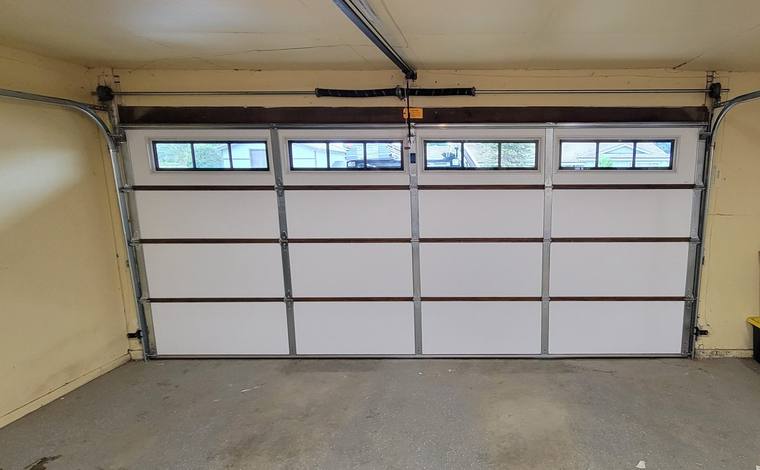
If it sounds like this
What we hear most often on the phone, and what it usually turns out to be.
Almost always dry hinges or roller bearings. It tends to start in the hot months.
Fix it yourself first. Lubricate them, run the door a few times, and listen. If it still squeaks, a part is worn, not dry.
Usually worn roller bearings, or grit packed into them. Louder over weeks means the wear is moving along.
Book it within a few weeks. It isn’t dangerous yet. But each week adds strain on the opener.
Loose fasteners, or rollers with so much play that each panel moves on its own. Daily heating and cooling loosens hardware, so we see this often here.
Tighten what you safely can, then book it. Hinge screws and track-bracket bolts only. The bottom brackets are off limits.
The motor is trying and something is stopping it. Usually that’s a broken spring, a slide lock left on, or a stripped gear.
Stop pressing the button. Check the lock and look at the spring. Our guide to a door that won’t open covers the rest.
The springs no longer hold the door at the bottom of its travel, where it’s heaviest. It’s easy to get used to, because the door still works.
Stop using it and book it. A dropping door can land on a foot. It also bends bottom sections.
Most likely the steel moving as the sun heats it and it cools again. It’s most noticeable on dark doors facing west or south.
Usually nothing to fix. If it also pops while moving, at the same spot every time, book that one.
Safe homeowner work
Most squeaks and rattles are yours to fix with a ladder, a socket and the right lubricant. The bottom brackets at the two lower corners of the door are not. They stay under spring tension through the lift cable, even with the door shut.
A stepladder · A socket or nut driver that fits the hinge screws · A lubricant made for garage doors · A clean rag
Time About 20 minutes
Each bottom corner of the door has a bracket where the lift cable ties on. It carries the pull of the springs all the time, even with the door closed. DASMA, the door manufacturers’ association, says these brackets are under extreme tension and should be adjusted or loosened only by a trained technician. That includes a bolt on one that looks loose. The same goes for the springs, the spring shaft and its end brackets, the drums and the cables.
A full hardware check is part of any service visit we do.
Lubricated and tightened, and it’s still loud?
Then something is worn, not dry. We find the part by listening first, and show you before we replace it.
The two biggest noise makers
Between them, worn rollers and a wearing opener cause most of the loud doors we see.
Worn or dry rollers are the most common reason a door is loud. Plain steel rollers without sealed bearings are a common builder-grade part. As they wear, they grind and let the door shake.
A worn roller wobbles in its hinge, has a flat spot, or won’t spin freely. Nylon rollers with sealed bearings run far quieter.
The bottom rollers sit in the bottom brackets, so they aren’t a homeowner swap. Our roller replacement page covers the job.
The drive type sets how loud an opener is on its best day. Our openers page compares chain, belt and wall-mount units.
A stretched chain slaps the rail when the door starts and stops. Grinding from the opener head usually means a wearing drive gear.
With a room above the garage, some of the noise is vibration carried through the opener’s mounting straps. Rubber isolators between the straps and the ceiling can reduce it.
In rough order of payoff: lubricate the hinges and roller bearings. Tighten loose hardware. Replace worn rollers with sealed nylon ones. Isolate the opener from the ceiling. Choose a quieter drive when the opener is due anyway.
It’s rarely worth replacing a working door for noise alone.
Riverside County
Most of these noises happen anywhere. This county’s sun, dust and wind make some of them more common.
A door facing west or south can tick and pop through the afternoon, and again as it cools. As far as we can tell, that’s the steel and its fasteners shifting as they heat. It isn’t a fault by itself.
In the Coachella Valley and the Pass, blown sand sticks to anything oily. The mix grinds like sandpaper and wears roller bearings faster. Wipe the tracks and go easy with lubricant.
In Banning, Beaumont and the rest of the Pass, wind makes panels drum and loose seals flap or whistle. Worn rollers knock in the tracks on gusty nights. Look the door over once the wind drops.
Heat dries lubricant faster and hardens rubber and vinyl. A hardened side seal can squeak against the door as it moves. That’s why squeaks tend to show up in June, not January.
In the Palo Verde Valley, damp air and heat rust bearings and hinge pins. Rusty parts squeal, then grind. Rust on a spring is something to tell us about, not to touch.
In Idyllwild, Anza and Aguanga, a bottom seal can freeze to the slab overnight. The crack as the opener tears it free is the seal, not the spring. Don’t force it. Let it thaw.
My new door is loud
A door that was quiet on day one and noisy a few weeks later is usually settling, not failing.
In the first weeks, fasteners bed in and the rollers wear into the tracks. A new spring can also relax a little, which changes the balance. That’s normal, and it usually means one follow-up adjustment.
Call the company that installed it first. Early adjustment should be part of the installer’s job, and someone else working on it can complicate the warranty on their work.
The other common cause is a kept opener. It was set up for the old door, so a heavier or lighter new door needs its force and travel set again. Until then, it can strain, bang at the top, or push hard at the bottom.
If that kept opener has no battery backup, there’s a legal problem too: California Health and Safety Code section 19892(c) says a replacement door may not be connected to it, as our opener law guide explains.
Last, the door itself. A new uninsulated steel door can sound louder than the wood or insulated door it replaced. That isn’t a fault, and quieter rollers help most.
Questions
The questions people search for when the door starts making a new sound.
Call and ask. There’s no charge for a question, and Beau has been doing this since 1996.
(951) 232-9778Mon–Sat 8am–6pmThe direction is a clue. As the door comes down, the springs carry more of its weight, and it’s heaviest near the floor. A door that bangs at the bottom often has springs that aren’t holding it anymore.
A noise only on the way up is often the top section rounding the curve, or an opener straining to lift a door that has gotten heavy.
Usually dry hinges or roller bearings. It often starts in hot weather, and a lubricant made for garage doors on those parts fixes most squeaks.
If the squeak comes from the spring, DASMA notes that springs can squeak from normal use without anything being wrong. Leave the spring alone and mention it at the next service.
Most often, roller bearings that are worn or clogged with dirt. Grit in the track does it too, especially in the desert. If the grinding comes from the opener head, the drive gear is usually wearing.
It isn’t urgent the way a bang is. But it won’t fix itself, and it makes the opener work harder.
If the door is sitting still in the sun, it’s most likely the steel moving as it heats and cools. That’s common on dark doors and isn’t a fault.
If it pops while moving, at the same point every time, suspect a cracked hinge, a flexing panel or the spring. One very loud bang is different. That’s usually a broken spring, so don’t use the door.
A faint hum from an idle opener can be normal, because it stays powered to listen for the remote. A louder hum, a buzz, a hot case or a burning smell is not. Unplug it and have it checked.
If it hums when you press the button but the door doesn’t move, let go. The motor is stalled, often by a broken spring or a locked door.
Wind pushes on the whole face of the door. Panels flex and drum, loose seals flap or whistle, and worn rollers knock in the tracks. None of that is a fault on its own.
Keep the door closed in high wind. Once it drops, look for a bowed panel or a bent track before you run it.
Usually it needs its first adjustment. Hardware settles in the first weeks, and a new spring can relax a little. If the old opener was kept, its settings were made for the old door.
Call the installer first. A new uninsulated steel door can also just sound louder than the one it replaced, and quieter rollers help most there.
Usually not. Squeaks, rattles and grinding are wear, and wear gives you time to book. Three noises are different: one loud bang, a door that slams down the last few inches, and an opener that hums while the door stays put.
Any of those can mean the springs are no longer carrying the door. Stop using it until it’s been looked at.
Further reading
The fix for the most common cause of a loud door, and why every roller gets replaced at once.
Rollers and tracksThe full lubrication routine, why desert tracks stay dry, and the checks that catch a noise early.
The maintenance guideChain, belt and wall-mount drives compared, and what an opener repair involves.
OpenersOn a visit
We run the door with you and listen first, because the sound leads to the part. Then we show you what we found.
If the fix is lubrication and a few loose screws, we’ll say so and show you how to do it next time. If parts are worn, you get a flat quote before work starts. Either way, the door gets a balance test by hand and both safety tests, including contact reversal on a 2x4 laid flat.
Looking at a door is free. We don’t quote over the phone, because a door can’t be priced without being seen. We cover all of Riverside County from our shop in Riverside.
Tell us what it sounds like, or hold the phone up while the door runs. If the door feels heavier than it used to, say that first.
Riverside Classic Garage Doors · 6410 Industrial Ave #3, Riverside, CA 92504 · (951) 232-9778 · Monday–Saturday, 8am–6pm · Closed Sunday