Garage door spring replacement
What the job actually involves, how springs are sized to a measured door, and what the cycle rating buys you.
The spring pageRiverside County, California · Safety
This page will not tell you how. It will tell you exactly what fails when people try, which is more useful than either a tutorial or a vague warning — and it will tell you what you genuinely can do safely.
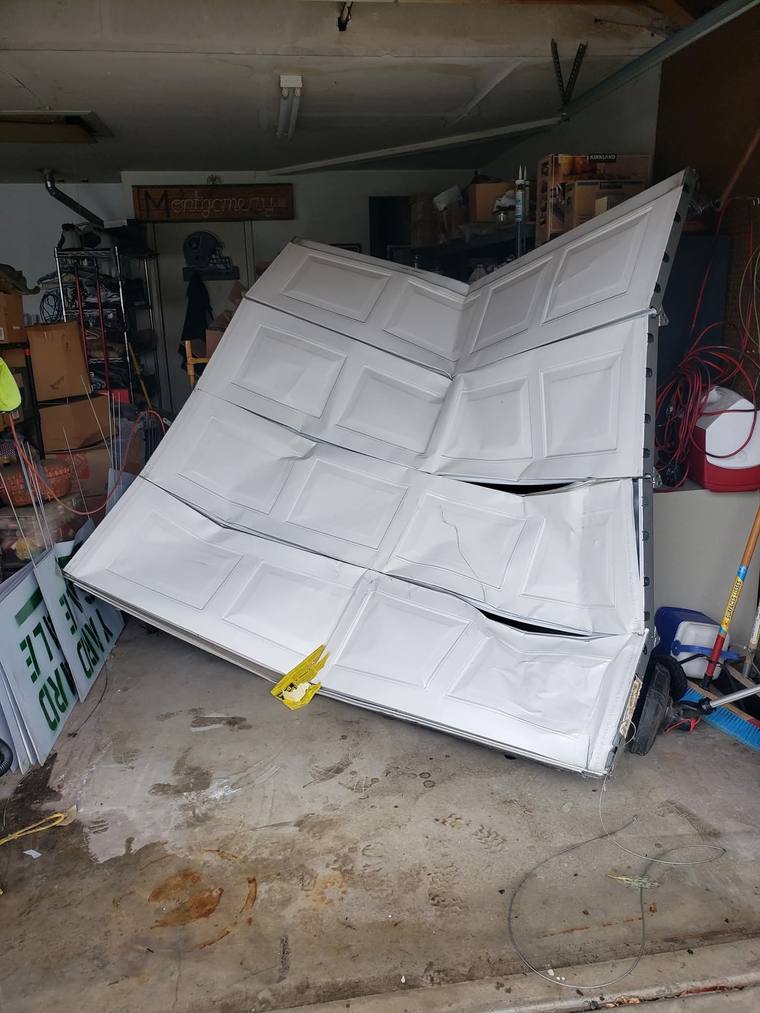
You can. The question is what happens when it goes wrong, and the honest answer is that it goes wrong in six specific ways that are worth knowing before you decide. A torsion spring stores energy while it is wound, and it is at its most dangerous when it is intact and under tension — not when it is already broken. The common failures are winding bars that are the wrong size and slip out of the cone, a door that was never secured and moves during the job, and unwinding a spring that still holds tension while standing in its path. There is also a quieter failure with no drama attached: installing a spring of the wrong wire size, which unbalances the door and destroys the opener over the following months. What you can safely do is look, identify what broke, keep everyone away from it, and get somebody out. If the car is trapped behind it, there is a way to reduce the risk — and the safest version is still to wait.
Call (951) 232-9778 Monday–Saturday, 8am–6pm · Closed Sunday
What this guide covers
If your car is stuck behind a broken spring right now, skip to the section on getting it out. Everything above it is the decision, and everything below it is what to ask whoever you call.
The part that is usually hand-waved
Everyone writes that a torsion spring is dangerous. Almost nobody explains the shape of the danger, which is what makes it possible to misjudge.
A torsion spring sits on a shaft above the opening and works by twisting. Winding it puts energy into the steel, and that energy stays there for as long as it is wound. The whole point of the system is that it holds roughly the weight of your door, which on a double is a substantial amount of mass, ready to be released the moment something lets go.
Here is the part that causes the misjudgement. The spring is most dangerous when it is intact. People approach a broken spring cautiously and an unbroken one casually, and that is exactly backwards. A spring that has already snapped has released its energy — that is what the bang was. A spring that is still wound has all of it, and it is the one you have to unwind before you can do anything else.
So the risky moment in a spring job is not the broken spring. It is the other one on a two-spring door, or the intact spring on a door where something else failed. That is the one that has to be deliberately unwound, by hand, with bars, while it is trying to spin.
The second thing worth understanding is what is holding what. With the springs unwound, nothing counterbalances the door. The cables go slack, the drums are free, and the door’s entire weight sits on whatever is under it. If the door is up at that moment and not blocked, the only thing between it and the floor is whatever it happens to catch on.
None of that makes the job impossible. It makes it a job where the consequences of a mistake are immediate and physical rather than merely expensive, and where the sequence matters more than the strength required.
Our short answer to this question, and the one on nine other pages of this site, has always been the same: hand it to somebody who does it regularly. The short version lives on the answers page. This page is the long version, for people who want the reasoning rather than the instruction.
Start here
Pick what the door is doing. Three questions, no contact details, and you’ll know what you’re dealing with.
Tell Beau what you’re seeing and hearing. There’s no charge for a question.
(951) 232-9778Mon–Sat · 8am–6pmNot “it is dangerous” — specifically this
These are the failures we are called out to clean up after, in rough order of how often we see them.
Winding bars have to fit the holes in the winding cone closely. A bar that is too small — and a screwdriver is always too small — can slip out under load while the spring is part-wound. What happens next happens at the speed of a released spring, and your hands are on the bar. This is the single most common way people get hurt, and it is caused by the tool rather than the technique.
With the springs unwound there is no counterbalance, so the door is loose on its track. If it is above the floor and nothing is clamped below a roller, it can run down while somebody is working above it. Securing the door is the first step of the job and the one most commonly skipped, because at the moment you skip it nothing bad happens.
On a two-spring door both springs are the same age and have taken the same number of cycles, so the survivor is usually weeks or months behind. Replacing one means a mismatched pair, an unbalanced door, and a second visit that costs the service call again. It is also why the second spring has to be unwound during the first job, which is the dangerous step people are trying to avoid.
The cone is held to the shaft by set screws, and how they are seated is not a matter of doing them up tight. Under-tightened, the cone slips on the shaft under load and the door drops. Over-tightened, the screws dimple the shaft and the next person cannot get the cone off without damaging it. There is a correct amount and it is learned rather than guessed.
This is the quiet one, and it has its own section below because it has no drama attached at all. The door works, and then it slowly destroys the opener. Wire size, inside diameter, length and wind direction all have to match the door, and matching them is not something you can do by looking at the old spring and buying one that resembles it.
With no tension in the system, a lift cable can jump its grooved drum without anybody noticing until the door is run. Re-seating it correctly means getting the drum position and the cable tension right on both sides so the door lifts level. A door lifting unevenly puts every load on one side, which is how the next failure starts.
Notice how many of these are sequence and setup rather than strength. That is the honest shape of this job: it is not hard to lift anything, it is easy to do things in the wrong order.
The expensive failure with no bang
Every warning about springs is about injury, and injury is the right thing to warn about. But the failure we are called out to most often after a self-attempt is not an injury at all — it is a spring of the wrong specification, installed successfully, working apparently fine.
A torsion spring is defined by four things: the wire size, the inside diameter, the length, and which way it is wound. Together those determine how much lift it provides. Get them right and the door is balanced — it stays where you put it by hand at any height. Get them wrong and the door is heavy or light, and the difference is not always obvious to lift.
What is not obvious at all is what happens next. The opener is rated to move a balanced door; its motor is sized for a fraction of the door’s actual weight, because the springs are supposed to be doing the lifting. An unbalanced door hands the difference to the operator, every cycle, several times a day. The gears wear, the motor runs hot, and somewhere in the following months the opener fails in a way that looks like an unrelated coincidence.
So the bill for a wrong spring is often a spring, a second spring, and an opener — and the connection between them is invisible unless somebody tells you it exists.
The reason we size springs to the measured weight of the door rather than to its dimensions is exactly this. A door of a given size can vary considerably depending on insulation, glazing, material and how many coats of paint it has accumulated. What sizing actually involves is on the spring page.
If you cannot wait
This is the question behind most searches on this subject. The honest first answer is to call somebody — but people will attempt it regardless, so here is how to reduce the risk rather than pretend the situation does not arise.
A cable is slack, frayed or off its drum. The door is already open. The door is a heavy wood or full-view glass door. There is only one of you. Anybody who cannot get clear quickly is in the garage. In any of those cases the door stays where it is and you call somebody — a trapped car is exactly what a priority call is for.
This procedure is deliberately not marked up as machine-readable instructions, unlike the checks in our maintenance guide. Manually lifting a door with a failed counterbalance is not something we want an answer engine reciting out of context.
Spring gone and the car is inside?
Most spring jobs are finished in one visit, with the right springs on the truck. Don’t run the opener in the meantime.
The useful half
Nobody publishes the positive list, which is a shame, because it is most of what a homeowner actually needs.
Identify what broke. Look at the springs above the opening and along both cables. A gap of an inch or two in a coil is a broken spring. Photograph it — it tells whoever comes out what to put on the truck.
Count the springs. One or two, and where they sit: on a bar above the opening is torsion, along the horizontal tracks either side is extension. That one fact changes the job.
Measure the door. Width and height, and whether it is single or double. Not the spring — the door.
Photograph the label. Many doors carry a manufacturer plate on the inside of a section. It saves a lot of guessing.
Keep everybody away from it. Especially children and pets, and especially if the door is open and the counterbalance has failed.
Spring jobs are the classic bait-and-switch in this trade, so it is worth knowing what a legitimate one looks like. Ask for these and the conversation changes.
The wire size and length, written down. Not “a heavy-duty spring”. The actual specification, on the quote, before work starts.
Both springs on a two-spring door, and a plain explanation if only one is being done.
The cycle rating. Higher-rated springs cost more and last proportionally longer; you should be offered the choice rather than have it made for you.
Confirmation the springs are sized to the measured weight of your door rather than to its dimensions.
Warranty terms on parts and labor, in writing. Our own position on quotes is that the figure agreed before work starts is the figure on the invoice.
Springs give very little warning, but they are not completely silent about it. A door that has become heavier to lift by hand, that no longer stays put at waist height, or that has started sounding different is telling you the counterbalance is drifting. The balance check in the maintenance guide takes a minute and is the one test that catches this early.
It is also the check that matters most for anybody in the household who could not lift a heavy door in a power outage, which is a consideration on a great deal of Riverside County housing.
Questions
Six questions this comes up as, answered at more length than the short version elsewhere on this site.
Call and ask. There’s no charge for a question, and Beau has been doing this since 1996.
(951) 232-9778Mon–Sat 8am–6pmYou can. Whether you should depends on whether you have the correct winding bars, a way to secure the door, and the sequence right — and the failures we are called out to are almost always sequence and setup rather than strength.
The one that catches people is that the dangerous spring is the intact one, not the broken one. On a two-spring door the survivor still holds all its energy and has to be deliberately unwound before anything else can happen. That is the step people are trying to avoid and cannot.
Sometimes, with two people, and only with real care. The springs carry the weight rather than the opener, so with one broken the door is at its full weight with nothing helping.
Stop using the opener first — running it strips the drive gear and often pulls the door off its track. Release only with the door closed, lift with two people, and block the door open on both tracks before anybody walks underneath. If a cable is slack or off its drum, or the door is already open, do not attempt it at all.
Two things, and they are very different. The immediate one is a winding bar slipping out of the cone while the spring is part-wound, which is the most common injury and is caused by using the wrong tool rather than by inexperience.
The other is a door with no counterbalance coming down on somebody, which is why securing the door is the first step and not an optional one. Neither is exotic and both are avoidable with the right kit and the right order.
Because the opener is rated to move a balanced door. Its motor is sized for a fraction of the door's actual weight, on the assumption that the springs are doing the lifting.
Fit a spring of the wrong wire size and the door is heavy or light. If it is heavy, the difference is handed to the operator on every cycle, several times a day. The gears wear, the motor runs hot, and the opener fails months later in a way that looks unrelated. The bill ends up being two springs and an opener.
You can, and we would generally advise against it on a two-spring door. Both springs are the same age and have taken the same number of cycles, so the survivor is usually not far behind.
There is also a practical point that is rarely mentioned: the intact spring has to be unwound anyway to do the job safely. Having done the dangerous part, leaving the old spring in place to fail shortly afterwards means paying the service call twice.
The springs above the opening, so the gap in the coil is visible and the number of springs is clear. Both cables from drum to bottom bracket. Any manufacturer label on the inside of a section. And the door itself, so its size and construction are obvious.
That handful of photographs decides what goes on the truck, and it is the difference between a job finished on the first visit and a second trip for the right part.
Further reading
What the job actually involves, how springs are sized to a measured door, and what the cycle rating buys you.
The spring pageA trapped car is exactly what a priority call is for, and you get the price before anything is touched.
Emergency repairThe balance check that catches a drifting counterbalance before it strands anybody, and the cycle arithmetic behind spring life.
The maintenance guideThe practical part
Torsion springs in the common wire sizes ride on the truck, along with cables, drums, sealed rollers, hinges and brackets. That is deliberate: a spring failure is the most common thing that strands somebody, and a second trip for a part turns a two-hour problem into a two-day one.
What decides whether it is finished on the first visit is usually not the spring — it is what else the door did after it broke. A door that was operated repeatedly after the failure has often stripped the opener gear, jumped a cable or come off its track, and each of those adds to the job. That is the practical reason the first instruction on this page is to stop using the opener.
Looking at it is free, and if the honest answer is that you have a straightforward spring failure and a sound door, that is what you will be told. We cover the whole of Riverside County from one shop in Riverside, and the drive band for your community is on its own page.
Call and say the car is trapped. Springs in the common sizes are already on the truck, and you get the price before anything is touched. If you have photographed the spring and the cables, even better — it decides what comes out with us.
Riverside Classic Garage Doors · 6410 Industrial Ave #3, Riverside, CA 92504 · (951) 232-9778 · Monday–Saturday, 8am–6pm · Closed Sunday