Choosing a garage door in Riverside County
What to specify for your climate zone, including what the wind-region and interface designations mean for the door itself.
The specification guideRiverside County, California · Permits and codes
Almost every page you will find answering this question is about somewhere else. The top results for it are currently about Illinois, Georgia and Florida — which is unhelpful, because the answer is entirely a matter of local jurisdiction.
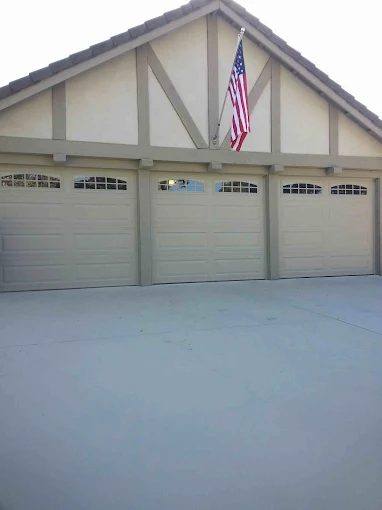
In Riverside County, a like-for-like garage door replacement generally does not need a building permit, and work that changes the structure or the electrics generally does. The part that trips people up is not the rule — it is knowing who to ask. If you live in one of the county’s twenty-eight incorporated cities, your own city’s building department issues the permit. If you live in an unincorporated community — Rubidoux, Highgrove, Woodcrest, French Valley, Idyllwild, Thousand Palms and many others — it goes through Riverside County Building & Safety instead. Swapping a door into an existing opening is usually the first case. Widening the opening, altering or replacing the header, or running a new dedicated circuit for an opener is usually the second. Confirm it with your own department before you commit to anything: they are the only authority on their own rules, and requirements change.
Call (951) 232-9778 Monday–Saturday, 8am–6pm · Closed Sunday
What this guide covers
The table part-way down lists every community we serve and which department issues its permits. If that is all you came for, jump to it — the rest is what generally triggers a permit and the three California code items that change the job.
Before anything else
“Do I need a permit to replace my garage door?” is a local question wearing a national costume.
Building permits are issued by whichever authority has jurisdiction over your address. There is no national answer, no statewide answer, and no answer that holds for the whole of Riverside County. That is why the search results for this question are so poor: the pages ranking for it are written by companies in other states describing their own city’s rules, and the advice does not travel.
For a straightforward replacement — the same size door going back into the same opening, on the same header, with no electrical work — most jurisdictions treat it as a repair or a like-for-like replacement, and it generally does not require a permit. That is the common case and it is probably yours.
The moment the job touches the structure or the electrics, that changes. Making the opening wider or taller, altering or replacing the header above it, changing the framing either side, or running a new dedicated circuit for an operator are all work that generally does need a permit and an inspection. So does converting a garage into living space, which is a different project that happens to involve a door.
The honest position on the rest is this: we can tell you with confidence who decides, because that follows from whether your community is incorporated. We can tell you what generally triggers a permit, because that pattern is consistent. We cannot tell you what your particular department will say about your particular job, and neither can any other page on the internet. Call them, or let us do it — we do it routinely and it is part of the job.
Nothing on this page is a fee schedule. Permit costs are set per jurisdiction and change without notice, and we have not verified a single one — a wrong figure would be worse than none. The same principle governs how we price the work itself.
Next step
We check who issues the permit for your address before we quote, and build it into the job.
Three quick questions narrow it down before you talk to anyone.
(951) 232-9778Mon–Sat · 8am–6pmThe question that decides everything else
Riverside County contains twenty-eight incorporated cities and a great deal of unincorporated land. Which you are in decides the department, the process and the inspector.
Your city’s own building department issues the permit and does the inspection. The county is not involved. That covers Riverside, Corona, Moreno Valley, Jurupa Valley, Eastvale, Norco, Perris, Temecula, Murrieta, Lake Elsinore, Menifee, Wildomar, Canyon Lake, Banning, Beaumont, Calimesa, Hemet, San Jacinto, Palm Springs, Palm Desert, Cathedral City, Rancho Mirage, Indian Wells, La Quinta, Indio, Coachella, Desert Hot Springs and Blythe.
Each of those runs its own counter, its own fee schedule and its own submittal requirements, which is exactly why a single answer for “Riverside County” does not exist. Two houses fifteen minutes apart can be dealing with two different departments and two different sets of paperwork.
Riverside County Building & Safety issues the permit instead. That covers a great many places that feel like towns and are not: Rubidoux, Mira Loma, Highgrove, Woodcrest, Lake Mathews, El Cerrito, Home Gardens, Temescal Valley, Mead Valley, Sun City, Quail Valley, Romoland, Meadowbrook, Sedco Hills, French Valley, La Cresta, Winchester, Nuevo, Homeland, East Hemet, Valle Vista, Green Acres, Cherry Valley, Cabazon, Idyllwild, Anza, Aguanga, Bermuda Dunes, Thousand Palms, Thermal, Mecca, Sky Valley, Vista Santa Rosa, Whitewater, Ripley, Mesa Verde and Lost Lake.
A postal address is not a reliable guide here. Plenty of unincorporated addresses have a city name in the mailing address because of which post office serves them, and that has nothing to do with which jurisdiction issues building permits. If you are not certain which you are, the table below is the fastest way to check.
Jurisdiction follows from incorporation, and incorporation is a matter of public record rather than of interpretation. Everything downstream of it — the fee, the submittal, whether your particular scope triggers a permit at all, how long an inspection takes to book — is a decision that belongs to that department on that day. Any page that tells you otherwise for a county this size is guessing.
The table nobody else publishes
Every community we serve, alphabetically. An incorporated city issues its own permits through its own building department and the county is not involved; everywhere else, Riverside County Building & Safety handles it. That sentence is true of every row, so it is said once here rather than sixty-five times below.
| Community | Status | Who issues the permit |
|---|---|---|
| AguangaSouthwest Riverside | Unincorporated | Riverside County Building & Safety |
| AnzaSouthwest Riverside | Unincorporated | Riverside County Building & Safety |
| BanningSan Gorgonio Pass & Hemet Valley | Incorporated city | City of Banning |
| BeaumontSan Gorgonio Pass & Hemet Valley | Incorporated city | City of Beaumont |
| Bermuda DunesCoachella Valley | Unincorporated | Riverside County Building & Safety |
| BlythePalo Verde Valley | Incorporated city | City of Blythe |
| CabazonSan Gorgonio Pass & Hemet Valley | Unincorporated | Riverside County Building & Safety |
| CalimesaSan Gorgonio Pass & Hemet Valley | Incorporated city | City of Calimesa |
| Canyon LakeSouthwest Riverside | Incorporated city | City of Canyon Lake |
| Cathedral CityCoachella Valley | Incorporated city | City of Cathedral City |
| Cherry ValleySan Gorgonio Pass & Hemet Valley | Unincorporated | Riverside County Building & Safety |
| CoachellaCoachella Valley | Incorporated city | City of Coachella |
| CoronaWestern Riverside | Incorporated city | City of Corona |
| Desert Hot SpringsCoachella Valley | Incorporated city | City of Desert Hot Springs |
| East HemetSan Gorgonio Pass & Hemet Valley | Unincorporated | Riverside County Building & Safety |
| EastvaleWestern Riverside | Incorporated city | City of Eastvale |
| El CerritoWestern Riverside | Unincorporated | Riverside County Building & Safety |
| French ValleySouthwest Riverside | Unincorporated | Riverside County Building & Safety |
| Green AcresSan Gorgonio Pass & Hemet Valley | Unincorporated | Riverside County Building & Safety |
| HemetSan Gorgonio Pass & Hemet Valley | Incorporated city | City of Hemet |
| HighgroveWestern Riverside | Unincorporated | Riverside County Building & Safety |
| Home GardensWestern Riverside | Unincorporated | Riverside County Building & Safety |
| HomelandSan Gorgonio Pass & Hemet Valley | Unincorporated | Riverside County Building & Safety |
| IdyllwildSan Gorgonio Pass & Hemet Valley | Unincorporated | Riverside County Building & Safety |
| Indian WellsCoachella Valley | Incorporated city | City of Indian Wells |
| IndioCoachella Valley | Incorporated city | City of Indio |
| Jurupa ValleyWestern Riverside | Incorporated city | City of Jurupa Valley |
| La CrestaSouthwest Riverside | Unincorporated | Riverside County Building & Safety |
| La QuintaCoachella Valley | Incorporated city | City of La Quinta |
| Lake ElsinoreSouthwest Riverside | Incorporated city | City of Lake Elsinore |
| Lake MathewsWestern Riverside | Unincorporated | Riverside County Building & Safety |
| Lost LakePalo Verde Valley | Unincorporated | Riverside County Building & Safety |
| Mead ValleyWestern Riverside | Unincorporated | Riverside County Building & Safety |
| MeadowbrookSouthwest Riverside | Unincorporated | Riverside County Building & Safety |
| MeccaCoachella Valley | Unincorporated | Riverside County Building & Safety |
| MenifeeSouthwest Riverside | Incorporated city | City of Menifee |
| Mesa VerdePalo Verde Valley | Unincorporated | Riverside County Building & Safety |
| Mira LomaWestern Riverside | Part of the City of Jurupa Valley | City of Jurupa Valley |
| Moreno ValleyWestern Riverside | Incorporated city | City of Moreno Valley |
| MurrietaSouthwest Riverside | Incorporated city | City of Murrieta |
| NorcoWestern Riverside | Incorporated city | City of Norco |
| NuevoSan Gorgonio Pass & Hemet Valley | Unincorporated | Riverside County Building & Safety |
| Palm DesertCoachella Valley | Incorporated city | City of Palm Desert |
| Palm SpringsCoachella Valley | Incorporated city | City of Palm Springs |
| PerrisWestern Riverside | Incorporated city | City of Perris |
| Quail ValleySouthwest Riverside | Part of the City of Menifee | City of Menifee |
| Rancho MirageCoachella Valley | Incorporated city | City of Rancho Mirage |
| RipleyPalo Verde Valley | Unincorporated | Riverside County Building & Safety |
| RiversideWestern Riverside | Incorporated city | City of Riverside |
| RomolandSouthwest Riverside | Part of the City of Menifee | City of Menifee |
| RubidouxWestern Riverside | Part of the City of Jurupa Valley | City of Jurupa Valley |
| San JacintoSan Gorgonio Pass & Hemet Valley | Incorporated city | City of San Jacinto |
| Sedco HillsSouthwest Riverside | Unincorporated | Riverside County Building & Safety |
| Sky ValleyCoachella Valley | Unincorporated | Riverside County Building & Safety |
| Sun CitySouthwest Riverside | Part of the City of Menifee | City of Menifee |
| TemeculaSouthwest Riverside | Incorporated city | City of Temecula |
| Temescal ValleyWestern Riverside | Unincorporated | Riverside County Building & Safety |
| ThermalCoachella Valley | Unincorporated | Riverside County Building & Safety |
| Thousand PalmsCoachella Valley | Unincorporated | Riverside County Building & Safety |
| Valle VistaSan Gorgonio Pass & Hemet Valley | Unincorporated | Riverside County Building & Safety |
| Vista Santa RosaCoachella Valley | Unincorporated | Riverside County Building & Safety |
| WhitewaterCoachella Valley | Unincorporated | Riverside County Building & Safety |
| WildomarSouthwest Riverside | Incorporated city | City of Wildomar |
| WinchesterSan Gorgonio Pass & Hemet Valley | Unincorporated | Riverside County Building & Safety |
| WoodcrestWestern Riverside | Unincorporated | Riverside County Building & Safety |
Incorporation status is a matter of public record; the rest of the process belongs to the department named. If your address sits near a boundary, call the department and read them the address — boundaries do not follow postal addresses and it takes them a moment to check.
Scope, not product
It is decided by what the work does to the building, not by how much the door costs or who makes it.
The useful mental model is that a building department cares about the structure, the electrical system and life safety. A garage door that drops into an existing opening on an existing header, with an operator plugged into an existing outlet, touches none of those things in a way most jurisdictions treat as permit work.
A like-for-like replacement into the existing opening, using the existing header and framing. Replacing sections, springs, cables, rollers, tracks or hardware. Replacing an operator that plugs into an existing receptacle. Repainting or refinishing. None of that alters the structure or adds a circuit.
Changing the size of the opening in either direction, which means new framing and usually a new header. Replacing or altering the header itself. Cutting a new opening, or filling one in. Adding a dedicated circuit or a new receptacle for an operator, which is electrical work. Converting the garage to living space, which is a different project entirely and where the door is the least of it.
There is also a category worth naming separately: work in a designated wildland-urban interface area, and work on a property with an active permit history or an open case. Both can change the answer for a job that would otherwise be routine, and both are things the department knows about and you may not.
Between those two lists sits a real gray area, and anyone who tells you it does not exist has not pulled many permits. Going from a single door to a double is obviously structural. Going from a non-insulated door to an insulated one of the same size obviously is not. Installing a heavier wood door that needs a different operator and a reinforced header sits somewhere in between, and different departments treat it differently.
Our approach on those is simple: we call the department and ask before anyone orders a door, and we tell you what they said. It costs a phone call and it removes the only genuinely expensive version of this problem, which is finding out after the work is done.
This is the general pattern across the county, not a ruling about your address. What a replacement actually involves is a separate question from what it needs on paper.
Beyond the permit itself
These apply to the work regardless of whether a permit is required, and the first one routinely changes the scope of a purchase at the last minute.
California has required battery backup on residential garage door openers since 1 July 2019, under Health and Safety Code section 19892. That much is fairly well known.
The clause almost nobody mentions is 19892(c): a replacement residential garage door may not be connected to an existing opener that does not meet the requirement, and a civil penalty applies per non-compliant opener.
In practice: if you are replacing a door and your opener predates the rule without a backup battery, the opener is part of this job whether you planned it or not. What that means for the opener choice.
California Building Code Chapter 7A and the state’s wildland-urban interface provisions govern construction in designated fire hazard areas, and they include requirements about the gap between a door and its opening, to resist ember intrusion.
In this county that reaches the foothill and mountain communities — Idyllwild, Anza, Aguanga, La Cresta, Cherry Valley and the Temecula and Murrieta foothills among them.
We are not going to publish a dimension we have not confirmed against the current code text. Ask the county which interface requirements apply at your address, and have the answer written into the specification before the door is ordered rather than discovering it at inspection.
Every residential garage door operator manufactured for sale in the United States from 1 January 1993 must have a secondary entrapment protection system — in practice the photo-eyes near the floor — under the federal rule at 16 CFR 1211 and the UL 325 standard it implements.
This is not a permit matter, it is a product and installation matter, and it applies to every job. A technician who disables or bypasses photo-eyes to make a door work has not repaired anything; they have moved a liability onto you.
Ask what was done to the safety system before anyone leaves, and test it yourself afterwards.
Want us to make the permit call for you?
Give us your address. We’ll check whether the job needs a permit and who issues it, and put it in the written quote.
If your job does need one
Six steps, and on a residential garage door job none of them is dramatic. The reason people dread it is unfamiliarity rather than difficulty.
Unpermitted structural work does not usually cause a problem the week it is done. It causes a problem at resale, when an appraiser or a buyer’s inspector finds an altered opening with no record, and it can complicate an insurance claim if the work is ever implicated in a loss. Retroactive permitting is possible and it is more painful than doing it in order. That is the whole argument, and it is a practical one rather than a moral one.
Questions
The six we get asked most, answered for this county rather than for Georgia.
Call and ask. There’s no charge for a question, and Beau has been doing this since 1996.
(951) 232-9778Mon–Sat 8am–6pmGenerally not, if it is a like-for-like replacement into the existing opening using the existing header, with no new electrical work. That is the common case. Widening or altering the opening, changing the header, or running a new dedicated circuit for an operator generally does require one.
Who you ask depends on where you live. Twenty-eight incorporated cities issue their own permits; everywhere else in the county goes through Riverside County Building & Safety. Confirm your specific job with that department — they are the only authority on their own rules.
The table on this page lists all 65 communities we serve with the answer for each. Do not rely on your postal address: many unincorporated addresses carry a nearby city’s name simply because of which post office serves them, and that has nothing to do with permit jurisdiction.
If you are near a boundary, call the department and read them the address. It takes them a moment to check and it settles it properly.
Swapping an operator that plugs into an existing receptacle is generally not permit work. Adding a new dedicated circuit or a new receptacle for it is electrical work and generally is.
Separately from permits, California has required battery backup on residential openers since July 2019, and a replacement door may not be connected to an existing opener that does not meet that requirement. That is worth establishing before you buy a door, not after.
Usually nothing immediately. The problem surfaces later: at resale, when an appraiser or a buyer’s inspector finds altered framing with no record, and potentially in an insurance claim if the work is ever implicated in a loss.
Retroactive permitting is generally possible and it is more work than doing it in order. If you have inherited unpermitted work with a house, the department is the right first call rather than the last.
In California an owner-builder can generally pull a permit on their own property, and a licensed contractor can pull one as well. Which of you does it decides who carries responsibility for the work and who books the inspections.
Settle it in writing before work starts. The version that goes wrong is the one where each party assumed the other had done it.
It depends on the address rather than on the county. Some communities sit inside designated special wind regions, and the foothill and mountain communities sit in wildland-urban interface areas with their own requirements about the door and its opening.
Both are decided address by address by the authority having jurisdiction, and both are worth establishing before a door is ordered. Our specification guide covers what those designations mean for the door itself.
Further reading
What to specify for your climate zone, including what the wind-region and interface designations mean for the door itself.
The specification guideWhat a replacement actually involves, what is included, and the four material tiers in full.
The replacement pageWhy we measure before we quote, what moves the figure, and why there are no numbers on this site.
Our pricing policyThe practical offer
We pull permits in this county routinely and we deal with most of these departments regularly. When we come and measure, part of what we do is establish whether the job as scoped needs one, and if the answer is not obvious we call the department and ask rather than guessing on your behalf.
You get told which side of the line your job falls on before you commit to anything, and you get told it in writing along with the specification. If the answer is that a permit is needed, we say so plainly rather than quietly leaving it as your problem — and if pulling it is our job under the agreement, we pull it.
The measure is free either way, and it is free whether or not you order the door from us. We cover the whole county from one shop in Riverside, which means we are dealing with the same handful of departments week in and week out rather than working somewhere unfamiliar.
Tell us your address and what you are planning to change. We will tell you which department covers you, whether the scope as described generally needs a permit, and what to ask them — and if it is not clear, we will call them ourselves.
Riverside Classic Garage Doors · 6410 Industrial Ave #3, Riverside, CA 92504 · (951) 232-9778 · Monday–Saturday, 8am–6pm · Closed Sunday