Opener compatibility and rolling code
How to tell an old fixed-code opener from a rolling-code one, and why the old kind is a security problem.
The compatibility guideSecurity · Ranked by effort
Most garage break-ins take no force and no skill, just an opening somebody left. Each one has a fix, and most of the fixes take minutes.
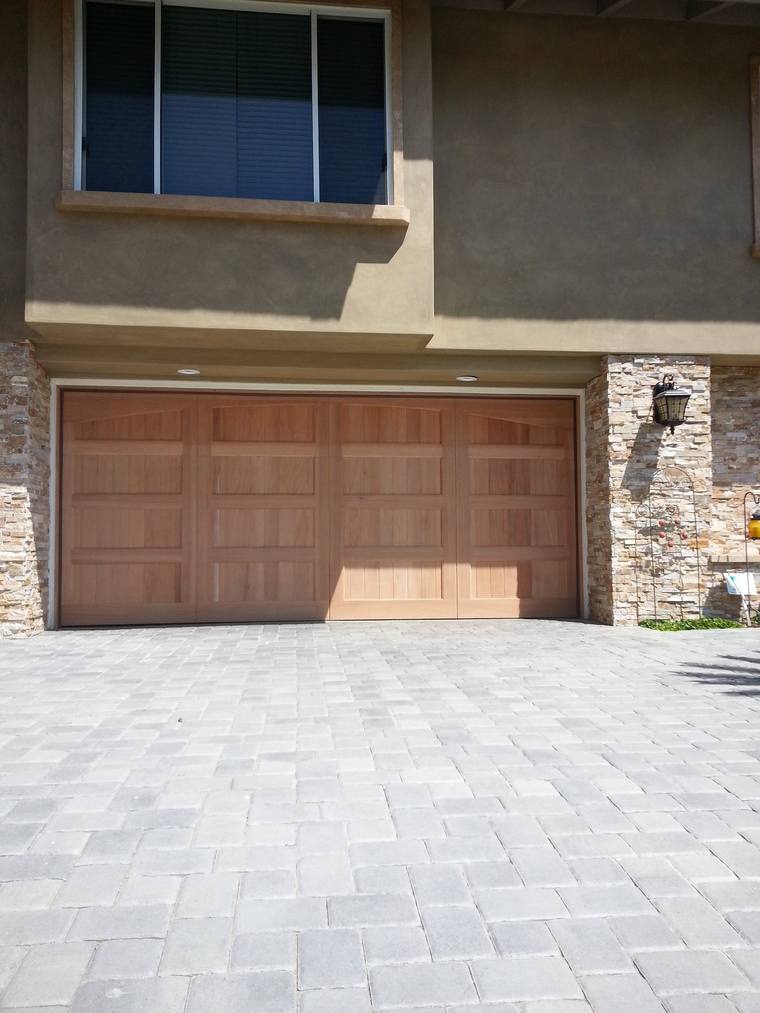
To secure a garage door from break-ins, close the easy ways in first: keep the door shut, stop the emergency release from being hooked from outside, keep remotes out of parked cars, and lock the door between the garage and the house. Most garage break-ins involve no forcing at all. The door is left open, a remote is taken from a car in the driveway, or the release on the opener is pulled through the gap at the top of the door. Each has a simple fix: an open-door alert or auto-close, a release shield, a keychain remote, and the lock or vacation mode on the wall control. For a long trip, a manual slide lock adds a bolt no remote can undo, as long as the opener is switched off so it can’t run against it. Then treat the house door like a front door: solid, deadbolted, and with a strike plate screwed into the framing.
Call (951) 232-9778 Monday–Saturday, 8am–6pm · Closed Sunday
What this guide covers
Rolling codes, insurance claims and the manual release each have their own guide, linked where they come up here.
Know what you’re defending against
This is the big one, and it needs no tools. A door left up while you’re out back. A door that bounced back up a few inches. A door opened a foot for air and forgotten overnight.
An open garage is an unlocked room with the house door at the back of it.
What stops it: A habit of checking, plus an open-door alert or an auto-close.
The red handle on the opener rail disconnects the door from the opener. That’s its job in a power outage. The weak spot is that it hangs near the top of the door, where a hooked tool pushed through the gap along the top edge can reach it.
Once it’s tripped, the door lifts by hand.
What stops it: A release shield, or a light tie on the release lever. Both must still let you pull it from inside.
A remote clipped to the visor of a car left on the driveway is a key to the house. California requires you to keep the registration in the car, and it usually shows your address. One tells a thief where the house is. The other opens it.
Airport parking is the worst case. The car sits for a week, and so does the empty house.
What stops it: A keychain remote that goes where you go, and lock mode while you’re away.
Older fixed-code openers send the same signal on every press, and the opener compatibility guide shows how to tell if yours is one.
What stops it: A new opener. No setting makes a fixed code secure.
The door from the side yard into the garage is often the weakest door on the property. It’s out of sight, and it’s often a light door with a knob lock.
The door from the garage into the house is the other half. Once someone is in the garage, it’s all that stands between them and your kitchen.
What stops it: A deadbolt, a solid door, and a strike plate screwed into the framing.
Clear glass shows the bikes, the tools and the second fridge. At night, with the garage light on, it shows them to the whole street.
It also shows when the car is gone. That’s the thing a thief most wants to know.
What stops it: Frosted or obscure film on the inside of the glass. The daylight still gets in.
Next step
Most fixes on this page take minutes. If you’d rather we did them, or something has already happened, start here.
Three quick questions narrow it down before you talk to anyone.
(951) 232-9778Mon–Sat · 8am–6pm
Start at the top
Work down the list. The first four rows cost little or nothing.
| Way in | The fix | Effort | Worth knowing |
|---|---|---|---|
| Door left open | Check it every night. Add an open-door alert, or turn on auto-close. | None to low. Many current openers have one or both. | Federal rule 16 CFR 1211.14 allows auto-close only on a sectional door, with a flashing light and a sound for at least 5 seconds first. It needs working photo-eyes. |
| Release hooked from outside | A release shield, or a light plastic tie through the release lever. | Minutes. | A firm pull on the red handle from inside must still free the door. Never use wire. |
| Remote taken from a car | A keychain remote. Nothing on the visor of a car that sleeps outside. | None. | Lock the car too. Built-in opener buttons work just like a remote. |
| Remotes used while you’re away | Lock mode, sometimes called vacation mode, on the wall control. | Seconds. | It shuts out handheld remotes. On some openers the keypad still works, so test yours. |
| A long absence | The manual slide lock, with the opener unplugged. | Minutes, each way. | Never run the opener against a locked door. A backup battery keeps an unplugged opener working. |
| Windows | Frosted or obscure film on the inside of the glass. | An afternoon. | Keeps the daylight. Do the side window too. |
| A dark driveway | A motion-sensing light over the big door and the side door. | An afternoon, or an electrician. | A light that snaps on gets noticed, by the visitor and by the neighbors. |
| A weak house or side door | A deadbolt, a solid door, and a strike plate with long screws. | An afternoon to a day. | The house door has fire rules too. See below. |
| A fixed-code opener | A new opener. | A service visit. | The biggest job on the list, and worth it on security grounds alone. |
Do just the first four rows and you’ve dealt with the break-ins that need nothing more than an opportunity.
The red handle
The release is how a person or a car gets out when the opener can’t move the door. Any fix has to leave that working.
On most openers the door hangs from a trolley that rides along the rail in the ceiling. While it’s connected, the opener holds the door down and it won’t lift by hand. The red handle disconnects the trolley. So the release, not the door, is what gets targeted.
A release shield is the tidiest fix. It’s a guard at the top of the door that stops a hooked tool from reaching the release. Nothing about how you use the release changes.
A tie on the release lever is the other common fix, and police crime-prevention advice has recommended it. A thin plastic tie goes through the lever on the trolley, so a tug from outside can’t trip it. A hard pull on the handle from inside should still snap it. So use a light one. Never wire, and never anything you’d struggle to break in the dark.
Whatever you install, the handle stays where an adult can reach it. With the power out and someone in the garage, it’s the way out. Removing the cord or tying it up out of reach swaps one risk for a worse one.
The release is meant to be pulled with the door closed, and our guide to opening a garage door manually covers using it safely.
Want your release, lock mode and remotes checked?
We’ll look at your setup the way a thief would, and fix what we find. Auto-close only goes on a door that allows it.
Leaving the house empty
A weekend needs the first three steps. A month or a summer needs all of them.
Opener instructions say to disable door locks before operating the opener. The motor pulls against the bolt, and something gives: the door, the track or the opener. If the door won’t move, check the lock before you press the button again.
The door that matters most
If someone gets into the garage, this door is all that stands between them and the rest of the house. It’s often the one door nobody locks.
A deadbolt. A knob lock alone can be pried. Put the thumb turn on the house side and the key side toward the garage, so nobody inside needs a key to get out.
A solid door. Knock on it. If it sounds hollow, it isn’t doing the job, and it may not meet the fire rule either.
A strike plate that reaches the framing. A forced door usually gives at the jamb, not the lock. A reinforced strike plate with long screws, typically about three inches, bites into the framing behind the jamb. The short screws in many lock boxes only reach the jamb.
Lock it at night and when you’re out, even with the big door shut.
This door is a fire separation as much as a door. When it’s installed or replaced, California Residential Code section R302.5.1 sets the rules.
It must be solid wood or solid or honeycomb-core steel at least 1 3/8 inches thick, or a 20-minute fire-rated door. It must close and latch by itself. And no door may open from the garage straight into a bedroom.
Those rules happen to be good security. The one people break is the self-closer, taken off because the door slams. Have it adjusted instead, so the door can’t be left standing open.
Homes with fire sprinklers have a narrower version of the rule, and older homes were built to older codes. Your building department has the final word.
A side door into the garage is hidden from the street, which is exactly why it gets tried. Give it the same deadbolt, solid door and long screws. If it has glass near the lock, consider a solid door or security film.
And don’t keep a spare house key in the garage. Anyone who gets in has all the time they need to find it.
Local, where it’s real
The ways in are the same everywhere. What differs here is how often doors get left open, and how long houses sit empty.
From Riverside to Indio, a closed garage on a summer afternoon is an oven. Doors get opened a foot for air and stay that way into the evening. A door open a foot is an open door. There are better ways to cool a garage, and an auto-close earns its keep here.
Many Coachella Valley homes sit empty all summer. That calls for the full long-absence setup: slide lock on, opener unplugged with its battery disconnected, no remote in any car left behind, and someone local who checks. We cover the whole valley.
On larger lots around Anza and Aguanga, and at mountain cabins that sit empty between visits, no neighbor is going to notice an open door. An alert on your phone does the job a neighbor would.
After the fact
It isn’t always over when they leave. Anything they took that opens the door still opens it.
If you think someone is still inside, don’t go in. Call 911 from somewhere safe. Otherwise, report it to the police and keep the report number.
Then list everything that could open the door now. A remote from the garage or a car. The keypad code, if anyone could have watched you use it. Spare house keys on a hook. A car with built-in opener buttons, if the car was taken.
Clear the opener’s memory. On many openers, holding the learn button until its light goes out erases every remote and keypad. Your manual has the exact steps. Then pair only the remotes you still have.
Change the keypad code. If the opener is connected to a phone app, remove anyone who shouldn’t have access and change the password.
Rekey the house door if keys went missing. And if the big door was forced, look before you run it. A bent section or a door sitting crooked in its tracks shouldn’t be run. That’s a call to us, not a job for the button.
If you’re claiming for the damage, the insurance guide covers what the insurer will want.
Questions
The questions people ask about locking up a garage, answered plainly.
Call and ask. There’s no charge for a question, and Beau has been doing this since 1996.
(951) 232-9778Mon–Sat 8am–6pmFit a release shield at the top of the door, or put a light plastic tie through the release lever so a hook from outside can’t trip it.
Either way, it has to keep working from inside. A firm pull on the red handle should still free the door, so never use wire. It’s the way out of the garage in a power outage.
Watch the door reach the floor, take every remote out of the cars, and turn on lock mode at the wall control. Then test the keypad, because on some openers it still works in lock mode.
For a month or more, add the slide lock. Unplug the opener and disconnect its backup battery first, so it can’t run against the bolt.
Many sectional doors have, or once had, a slide lock near one end. The bolt slides sideways into a slot in the track and stops the door moving.
Use it only when the opener can’t run, and unlock it before anyone presses a button. If the lock was disabled when the opener went in, that was on purpose.
A bar, bracket or bolt that pins the door from inside does work. It comes with the slide lock’s rule: the opener must never run against it.
So they suit long absences better than daily use. Day to day, a release shield, lock mode and a keychain remote do more, and there’s nothing to undo.
Not for security. Even a few inches tells passersby that nobody is watching the garage, and a foot is enough for a person to slide under.
It also leaves the house door as your only lock. If the garage needs air, cool it another way and close the big door.
For a household that forgets the door, yes. Federal rules allow it only on sectional doors, with a flashing light and a sound for at least 5 seconds before the door moves.
It depends on the photo-eyes. If the door reverses, it gets one more try, then stays open until someone operates it. Keep the eyes clean, and never bypass them.
Clear the opener’s memory the same day. On many openers, holding the learn button until its light goes out makes it forget every remote. Then pair the ones you still have.
If it was taken from a car, assume the thief has your address from the registration. Change the keypad code too.
Mostly, yes. While the door is connected to an opener on a ceiling rail, the opener holds it down and it won’t lift by hand.
That’s why the emergency release gets targeted. Once the door is disconnected, it’s just a door. Wall-mounted openers don’t hold it the same way, which is why some come with an automatic bolt.
Further reading
How to tell an old fixed-code opener from a rolling-code one, and why the old kind is a security problem.
The compatibility guideUsing the emergency release safely, which matters more once you’ve installed a shield or a tie.
The manual-opening guideWhat a claim after a break-in needs, and when making one is worth it.
The insurance guideOn a visit
We start where a thief would. Can the release be reached from the top of the door? Does lock mode work, and does your keypad ignore it? Is there a slide lock? Is the opener old enough to be fixed-code?
We’ll show you the options for the release, set up lock mode and auto-close where the door allows, and clear the memory and re-pair the remotes you keep. Auto-close only goes on a sectional door with working photo-eyes. Every visit ends with both safety tests, done in front of you. If the opener needs replacing, you’ll see why, and you’ll have a flat quote before any work starts.
Looking is free. We cover all of Riverside County from our shop in Riverside.
Tell us what opener you have, every way the door can be opened, and how long the house sits empty. If something has already happened, start with that.
Riverside Classic Garage Doors · 6410 Industrial Ave #3, Riverside, CA 92504 · (951) 232-9778 · Monday–Saturday, 8am–6pm · Closed Sunday