A sun shield on the receiver
A small hood that fits over the receiving eye and blocks light from the sides and above, leaving the beam’s path open. Opener makers sell them for their own eyes, and it’s the simplest fix.
Won’t close · Safety sensors
Two small eyes near the floor decide whether your door is allowed to close. When they can’t see each other, it won’t. Often you can put that right yourself in a few minutes.
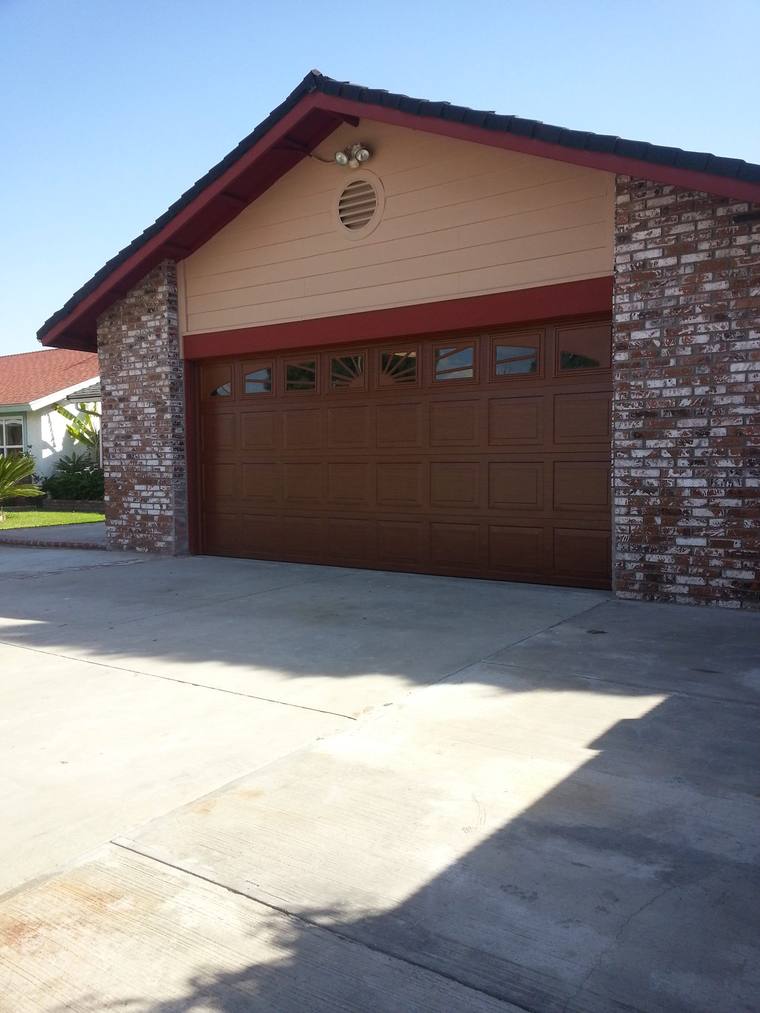
When garage door sensors stop working, the opener won’t close the door, because it can’t confirm the doorway is clear. Two small eyes, one low on each side of the opening, pass an invisible beam across it. A blocked beam, a knocked eye, a dirty lens, a damaged wire or low sun in the receiving eye all look like an obstruction to the opener. Start with the light on the receiving eye. Steady usually means it sees the beam. Blinking or off means it doesn’t. Clearing the path, wiping both lenses and re-aiming that eye until its light holds steady fixes many cases. Holding the wall button down may still close the door, but that’s a stopgap, not a repair. Never tape, bypass or raise the eyes to make the door close.
Call (951) 232-9778 Monday–Saturday, 8am–6pm · Closed Sunday
What this guide covers
Start with the lights and the table, then the safe fixes. If the door only fails in the afternoon, go straight to the sun section.
The basics
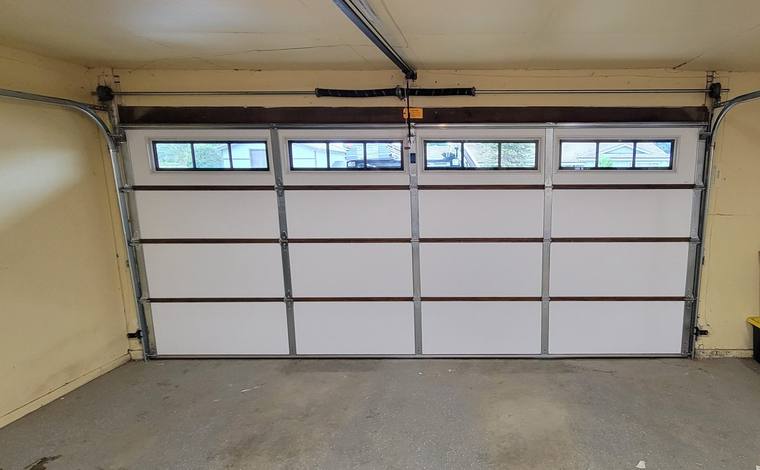
Low on each side of the door opening, usually bolted to the tracks, is a small sensor. The sending eye shines an invisible infrared beam across the opening. The receiving eye watches for it and tells the opener whether it can see it.
Lose the beam while the door is coming down, and the opener sends it back up. No beam at all, and the door won’t start down. No beam, no closing.
Each eye has a small indicator light. The sending eye’s light normally stays on whenever it has power. The light on the receiving eye is the one to watch. On most sets, steady means it sees the beam, blinking means it’s barely catching it, and off means it can’t see it.
Ignore the color. Sets use green, red, amber, yellow or orange, and makers don’t agree on what each one means. To find the receiver, put your hand in the beam. The eye whose light goes out or starts blinking is the receiving eye. The federal standard requires eyes that need aiming to have a way of showing they’re lined up, and this light is it.
Openers made for sale in the U.S. since January 1, 1993 fall under a federal rule, 16 CFR Part 1211, built on the entrapment-protection sections of the UL 325 safety standard. It requires a second layer of protection beyond the opener sensing that the door has hit something. On most homes, that layer is this pair of eyes.
The rule makes the opener check the eyes every time it closes. If they’re missing or faulty, or their wire is broken or shorted, the opener must either keep the door from coming more than about a foot down, or switch to a hold-to-close mode.
The beam sits low on purpose. Industry guidance says no higher than six inches off the floor, and the federal test requires the eyes to spot an object just six inches tall lying on the floor. Think of a crawling toddler, or a dog lying down.
Find your symptom
Check both lights, then find your row. “You” means a safe homeowner job; “us” means hidden wiring, bent track or the opener.
| What you see | Likely cause | What to do |
|---|---|---|
| Sending eye lit, receiving eye dark. | The beam isn’t arriving. Something is in the way, an eye is out of line, or a lens is dirty. | You. Clear the path, wipe both lenses, and re-aim the receiving eye until its light stays on. |
| Receiving eye blinking or flickering. | The beam is barely getting through: an eye nearly out of line, a loose bracket, or a film or cobweb on a lens. | You. Clean, re-aim, and snug the wing nut. If it settles only while you hold it, the bracket is bent. |
| Both eyes dark. | No power is reaching them. Usually a damaged or loose wire, sometimes a failed eye or the opener. | You, then us. Check the wire you can see. If it looks sound, call. |
| Both lights steady, door still won’t close. | Probably not the eyes. The opener may be reporting another fault, or the wall control’s lock is on. | Check the opener. Count any flashes and look them up in your manual. |
| Closes only while you hold the wall button. | The opener has found a sensor fault and switched to hold-to-close. | You, for now. Work through the fixes below. Watch the whole door come down while you hold. |
| Remote won’t close it, but the held wall button will. | The same sensor fault. In that mode the remote may only open the door. | Fix the eyes, not the remote. Re-pairing it won’t help. |
| Fails in the late afternoon, fine in the morning. | Low sun shining straight into the receiving eye. | You or us. A sun shield, or the receiver moved to the shaded side. See the sun section. |
| Started after rain, cleaning or moving things. | A wet or filmed lens, something new in the beam, or an eye bumped by a broom, hose, bike or trash can. | You. Dry and wipe the lenses, clear the line between the eyes, and re-aim. |
| Started after a car bumped the track. | A bent bracket or bent track, so the eye can’t hold its aim. | Us if the track is bent. A bent bracket on its own is usually a simple swap. |
| Two doors side by side, and trouble began after a sensor was replaced. | Crossed beams. One door’s receiver is seeing the other door’s sender. | You or us. Put both sending eyes back to back on the center post, or both receivers, then re-aim. |
| Starts down, then goes back up. | A different problem, with its own diagnosis. | Read our guide to a door that closes then opens. |
Start here
Pick what the door is doing. Three quick questions narrow down the likely cause before you talk to anyone.
Tell Beau what you’re seeing and hearing. There’s no charge for a question.
(951) 232-9778Mon–Sat · 8am–6pmA cloth, a flashlight, fifteen minutes
All safe for a homeowner. None touches the springs, the cables or the opener’s settings.
A soft, dry cloth · A flashlight · A cardboard box or a broom for the test
Time About fifteen minutes
You’ll see advice online to tape the two eyes together, wire across the sensor terminals, or mount the eyes up high where nothing bumps them. Each one gets the door closing again by switching off the one system that stops it on a child or a pet. If the fixes above don’t work, call someone. Don’t go around the safety.
Tried all six and the light still won’t hold steady?
It’s usually a wire in the wall or a bent bracket. We trace it end to end and test the door before we leave.
The stopgap
If the door closes only while you keep pressing the wall button, the opener has found a problem with the eyes and dropped into a fallback.
The federal rule sets out the choices. With the eyes missing or faulty, an opener may refuse to close at all, or switch to constant pressure. In that mode the door moves down only while someone holds a control mounted in sight of the door. Let go early and the door goes back up, all the way. The remote may only open. That’s why the remote seems dead while the wall button still works.
The rule lets the maker choose, and at least one major maker has dropped hold-to-close from openers and replacement boards built since early 2022. On those, a sensor fault keeps the door up until it’s fixed. If it’s stuck open and the house can’t be left that way, say so when you call.
Stand where you can see the whole opening, with children and pets inside the house or well away. Hold the button until the door is fully down. If anything moves toward the door, let go, and it will reverse. Then fix the cause this week. This is for one careful close, not every day.
Riverside County specifics
Sunlight carries infrared, the same kind of light the eyes use. When low sun shines straight into the receiving eye, the eye can’t pick its own beam out of the glare, and the opener reads that as something in the way.
The sun comes in low and level, through the open door and across the floor. If it lands on the receiving eye, the door won’t close until the sun drops or moves along. East-facing garages can get the same thing early in the morning.
Clear skies most of the year mean you’ll meet this more here than in cloudier places. It comes and goes with the seasons as the sunset point moves along the horizon, so a door can behave for months, then fail every afternoon for weeks.
In Banning, Beaumont and across the Coachella Valley, wind drives fine dust in under the door, and it settles on anything near the floor. A thin haze on a lens scatters the beam enough to make the receiving light blink. After a windy spell, wipe the lenses before you suspect the eyes.
Raising the eyes cures none of this. The glare is in the receiver’s lens, not at its height.
Fixing sun glare
A small hood that fits over the receiving eye and blocks light from the sides and above, leaving the beam’s path open. Opener makers sell them for their own eyes, and it’s the simplest fix.
A short piece of dark tube around the receiving lens does the same job, narrowing what the eye can see to the sending eye. It must not block the beam, and it should be short enough that a bumper or broom can’t catch it.
Makers’ own advice is that the receiving eye belongs out of direct sun. Trading the eyes side for side puts it there, but it means re-making the wire connections with the polarity right and re-aiming both. If that’s not work you’re comfortable with, a technician can swap which side receives.
Whichever you choose, finish with the beam test from the fixes above.
When to stop and call
If you’ve cleared, cleaned and re-aimed and the door still won’t close, the fault is usually somewhere you can’t see.
Count any flashes from the opener and look the pattern up in your owner’s manual. Codes differ between makers. Also check that the lock setting on the wall control is off.
Likely: the opener or its logic board. Call us with the flash count.
The break is probably inside a wall or ceiling, where a nail, screw or staple has gone through the wire. It can also be at the opener’s terminals, or a board that has stopped powering the eyes.
Likely: hidden wiring or the board. We test the run end to end and replace what’s damaged.
Eyes do fail. A cracked housing or a lens that stays cloudy after cleaning points at the eye itself.
Likely: a failed eye. Replace them as a matched pair made for your opener.
That’s a different problem, and the eyes rarely cause it.
Different fault. Our guide to a door that won’t open starts there. If only the remote has stopped working, the opener compatibility guide covers pairing.
Questions
What people ask when the door won’t close.
Call and ask. There’s no charge for a question, and Beau has been doing this since 1996.
(951) 232-9778Mon–Sat 8am–6pmA blinking light on the receiving eye usually means the beam is barely reaching it. The eyes are slightly out of line, a lens is dirty, or something is partly in the way. Clean, clear and re-aim until it holds steady.
Don’t read much into the color. Green, red, amber, yellow and orange are all used, and makers use them differently.
The eyes may be seeing something you can’t: a hazy lens, a single cobweb, low sun in the receiving eye, or an eye nudged slightly off line. The opener treats all of those as an obstruction.
If both lights are steady and it still won’t close, the opener itself is the next place to look.
Sunlight carries infrared, the same kind of light the eyes use. When low sun shines straight into the receiving eye, it can’t pick out its own beam, so the opener acts as if something is in the way. Late afternoon on a west-facing garage is the classic case.
Cast your shadow over the receiving eye and try the door. If it closes, it’s glare.
Yes, when the problem really is sun. A shield or short shade tube over the receiving eye blocks light from the sides and above and leaves the beam’s path clear.
Fit it to the receiver, not the sender, then test by passing a box through the beam as the door closes. If a shield doesn’t cure it, move the receiver to the shaded side.
Most openers report faults by flashing a light a set number of times, and many have a pattern that means the safety eyes. Count the flashes and look the pattern up in your owner’s manual.
We don’t publish a code chart, because codes differ between makers.
The opener has found a fault with the eyes and switched to a fallback mode. Under the federal safety rule, an opener in that mode closes only while someone holds a control within sight of the door, and the remote may only open it.
The remote isn’t broken. Fix the eyes and the remote will close the door again.
Yes. The opener checks the eyes every time it closes, and a broken or shorted wire looks the same to it as a failed eye. Staples, pinches, chewed insulation and corroded splices are the usual culprits.
Check the wire you can see. Wire inside a wall or ceiling is a job for us.
No. The eyes are low on purpose. Industry guidance puts the beam no higher than six inches off the floor, because a small child or a pet can pass under a higher one.
If things keep knocking the eyes, move the things. Keep bikes and trash cans off a clear strip along each side of the door.
Further reading
If the door starts down and turns around partway, the diagnosis is different, and it starts with where it reverses.
The reversing guideThe monthly safety tests, including the contact test with a 2x4 laid flat, and what to check after wind and heat.
The maintenance guideWhen the fault turns out to be the opener or its logic board, and what repair or replacement involves.
The opener pageOn a visit
Coming out to look is free. We check the lights, the beam path and the lenses, trace the wire from each eye to the opener, and check the brackets and the track they bolt to.
The fix is often small: a re-aim, a new bracket, a new wire run, a sun shield, or the receiver moved to the shaded side. If an eye has failed, we install a matched pair. If the opener itself is at fault, we show you what we found and agree a flat quote with you before any work starts.
Before we leave, we run both safety tests with you watching: the beam test, and the contact test with a 2x4 laid flat under the door. We won’t tape, jumper or raise a set of eyes to make a door close, and we won’t leave one that way. We cover all of Riverside County from our shop in Riverside.
Look at the light on each eye before you call. With that and the time of day it fails, we can often tell you on the phone whether you can fix it yourself.
Riverside Classic Garage Doors · 6410 Industrial Ave #3, Riverside, CA 92504 · (951) 232-9778 · Monday–Saturday, 8am–6pm · Closed Sunday