Openers · Riverside County
The opener is blamedmore often than it is guilty.
Most calls that start “the opener has died” turn out to be a broken spring, and the motor was only ever the messenger. We check the door before we sell you a machine.
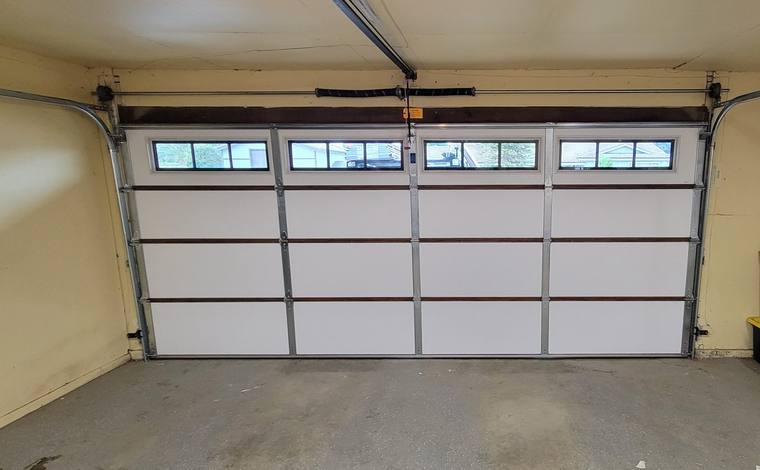
Diagnosis
What it is doing,and what that means.
| What you are seeing | Usual cause | What we do |
|---|---|---|
| Motor runs, door does not move | Broken spring, or a stripped drive gear | Check the spring first; gear kit only if the spring tests good. |
| Closes most of the way then reverses | Safety sensors out of line or dirty | Realign the photo eyes and test the safety reverse. |
| Reverses immediately on contact | Force setting too sensitive, or the door is binding | Re-balance the door, then reset the force limits. |
| Wall button works, remotes do not | Flat batteries, full memory, or a frequency mismatch | Clear the memory and re-pair every remote and keypad. |
| Grinding from the motor housing | Stripped nylon drive gear | Gear and sprocket kit, usually a same-visit repair. |
| Nothing at all, no lights | Power, a tripped circuit, or a failed logic board | Test the supply before condemning the board. |
| Opens by itself | Stuck button, jammed remote, or an old fixed-code opener | Clear memory and re-pair. Fixed-code units are worth replacing. |
Drive types
Four ways to move a door,and when each is right.
The honest summary: chain is cheapest and loudest, belt is the sensible default, wall-mount is the best and costs the most. Screw drives are mostly a legacy choice now.
Chain drive
A metal chain pulls the trolley along the rail. Cheap, tough and completely fine on a detached garage. It is also the loudest option by a distance, and you will hear it through a bedroom floor.
- NoiseLoud
- CostLowest
- Best forDetached garages
- Avoid ifA room sits above or beside
Belt drive
The same mechanism with a reinforced rubber belt instead of a chain. Much quieter, no meaningful loss of strength, and the price difference over a chain is small enough that we fit these far more often.
- NoiseQuiet
- CostModerate
- Best forAttached garages
- NoteThe sensible default
Wall-mount jackshaft
Mounts beside the torsion bar rather than overhead, so nothing runs above your ceiling and nothing hangs in the middle of the garage. The quietest option, and the only one that works properly with very low headroom.
- NoiseQuietest
- CostHighest
- Best forLow headroom, rooms above
- BonusFrees the ceiling entirely
Screw drive
A threaded steel rod turns to move the trolley. Fewer moving parts and it handles heat well, which is why plenty exist in the Inland Empire. We service them happily, but we rarely specify one on a new install now.
- NoiseModerate
- CostModerate
- Best forExisting installations
- NoteLargely superseded
Safety
The two eyesnear the floor.
Every opener sold in the United States since 1993 must have photo-eye sensors, because doors used to close on children. They sit a few inches off the ground facing each other, and if anything breaks the beam the door reverses.
- Never bypass them. Taping the beam or twisting the brackets to face each other defeats the only thing standing between a moving door and whatever is under it
- Most sensor faults are dirt or a knock, not a failure — a wipe and a realign fixes the majority
- Test it monthly by waving a broom through the beam mid-close
- California requires battery backup on openers installed since July 2019, so a replacement will have it whether you ask or not
Repair or replace
- Under ten years old, common faultGear, sensor, remote or logic board. Repair, almost always.
- Over fifteen, or parts are scarceReplacement usually costs less than chasing obsolete components.
- Fixed-code, no rolling codeWorth replacing on security grounds regardless of whether it works.
- No battery backupNot a fault, but every new unit has it, and a power cut is when you need the door most.
We check the door before the motor. Selling an opener to fix a spring problem is the oldest trick in this trade.
Get the openerlooked at properly.
Bo tests the door balance first, then the motor. If the opener is fine you will be told so, even though that is the smaller invoice.
What the visit covers
- Door balance by handBecause a heavy door kills openers, and a new one would die the same way.
- Sensor alignment and reverse testThe safety check most people have never had done.
- Remotes, keypad and carProgrammed and tested before we leave.
- An honest repair-or-replace callIncluding when the answer is that yours is fine.
Questions
Opener questions,answered straight.
Ten of the ones we get most. If yours is not here, the full answers page covers another forty-five.
Ring and ask. Bo has been doing this in Riverside County for over thirty years and there is no charge for a question.
(951) 232-9778Mon–Sat · 8am–6pmWhy does my garage door reverse when it closes?
Almost always the safety sensors near the floor are misaligned, dirty or blocked. They are two small eyes facing each other across the opening, and if the beam breaks the door reverses. It is the least expensive call on the list.
Never disable the sensors to force the door closed. They are a federal safety requirement and they exist because doors used to close on children.
My opener runs but the door does not move. Why?
Two likely causes. Either a spring has broken and the door is too heavy for the motor, or the plastic drive gear inside the opener has stripped. Check the spring first; if the coil has a visible gap, the opener is not the problem.
Should I repair or replace my garage door opener?
Repair is usually right if the unit is under ten years old and the fault is a gear, sensor or remote. Replacement makes more sense on an older unit, because parts get scarce and you gain quieter operation, battery backup and phone control.
California requires battery backup on openers installed since 2019, so a replacement will have it whether you ask for it or not.
What is the quietest type of garage door opener?
A wall-mount jackshaft opener, followed by a belt drive. Wall-mount units sit beside the door rather than overhead, so nothing runs above the ceiling. If a bedroom sits over or beside the garage, that is the one worth paying for.
Why will my remote not program?
Usually a flat battery, a full memory on the opener, or a remote that is not compatible with the unit's frequency. Clearing the opener's memory and re-pairing every remote fixes most cases, though it does mean reprogramming your car as well.
Can you program my car to open the garage?
Yes, and we do it as part of an opener installation. Built-in car systems need pairing with the opener directly, and on newer rolling-code openers that means using the learn button rather than copying an existing remote.
Do I need a smart garage door opener?
Only if you want to see or control the door from your phone. It is genuinely useful for deliveries and for anyone who regularly wonders whether they left it open. It makes no difference to how well the door runs.
How do I test my garage door safety features?
Two tests, both take a minute. Put a roll of kitchen paper in the door's path and close it; it should reverse on contact. Then wave a broom through the sensor beam mid-close; it should reverse again. If either fails, stop using the door.
How often should a garage door be serviced?
Once a year for an average household. A service means checking spring balance, tightening hardware, lubricating rollers, hinges and bearings, and testing the safety reverse. It is the cheapest way to avoid the calls we get most often.
Why does my garage door open by itself?
Usually a stuck button, a jammed remote in a pocket or car, or a neighbour's opener on the same frequency, which was common before rolling codes. Occasionally it is a faulty logic board. Clearing the opener's memory and re-pairing is the first thing to try.