Commercial operators · Riverside County
The operator is sizedto the door, not the budget.
Jackshaft units where headroom is tight, trolley operators on standard installs, chain hoists as manual backup. Undersizing an operator is the most expensive saving on a commercial site.
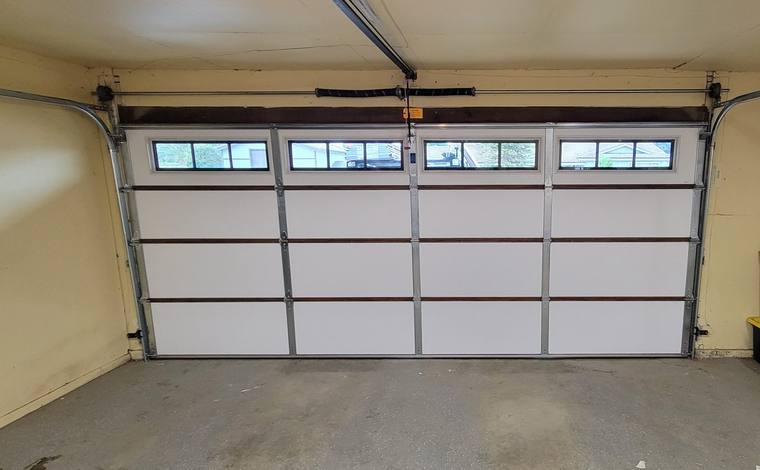
The three types
Beside it, above it,or by hand.
A jackshaft operator mounts beside the torsion bar and drives it directly. Nothing runs across the ceiling, which is why it is the answer wherever headroom is short or the ceiling is needed for something else.
A trolley operator runs a rail back from above the opening, the same arrangement as a domestic door built heavier. It is the standard choice on a sectional with normal headroom.
A chain hoist is manual and it is not a fallback for a failed operator so much as a deliberate choice on doors that move rarely, or a backup on doors that must open during a power cut.
How we size it
- Door weightMeasured, not assumed
- Cycle countOpenings per day, honestly
- HeadroomDecides jackshaft or trolley
- Duty ratingStandard, heavy or continuous
- ControlsThree-button, key, remote, loop
- SafetyPhoto eyes and edge sensors
The common mistake
An operator sizedfor a lighter door.
It runs. It runs for a while. Then it does not, usually at the least convenient moment, and the replacement costs more than the right one would have.
- Duty rating is not a formalityA standard-duty unit on a 200-cycle door is a consumable, not an installation.
- Weight includes the glazingFull-view and insulated doors are far heavier than a plain panel.
- Safety devices are not optionalPhoto eyes and edge sensors on a commercial door protect people and you.
What we install
- JackshaftBeside the torsion bar. Frees the ceiling, suits low headroom.
- TrolleyOverhead rail. The standard sectional arrangement.
- Chain hoistManual, for rarely-moved or power-cut-critical doors.
- Controls and safetyThree-button stations, key switches, loops, photo eyes, edge sensors.
We will tell you the duty rating you actually need, including when it is higher than you were quoted elsewhere.
Get the operator specifiedagainst the real door.
Bo weighs the door and asks how often it moves. Those two numbers decide the unit, and getting them right is most of the job.
What we measure
- The door, weighedNot estimated from the panel type.
- Openings per dayThe number that decides duty rating.
- Headroom and mountingWhich decides jackshaft or trolley before anything else.
Questions
Operator questions,answered straight.
Jackshaft versus trolley, duty ratings, and why sizing matters more than brand.
Ring and ask. Bo has been doing this in Riverside County for over thirty years and there is no charge for a question.
(951) 232-9778Mon–Sat · 8am–6pmHow fast can you get to a commercial breakdown?
Within working hours and inside Western Riverside County, usually the same day. We ask what the door is stopping when you call, because a dock door blocking despatch is a different priority to a store-room door that can wait until Thursday.
Can you service doors you did not install?
Yes, and most of our commercial work is exactly that. We service and repair whatever is already on site regardless of who fitted it, and we will tell you honestly when a door is past economic repair rather than keep patching it.
What operators do you fit on commercial doors?
Jackshaft units beside the door where headroom is tight, trolley operators on standard sectional installations, and chain hoists as a manual backup on larger doors. The choice comes down to headroom, door weight and how often it cycles.
Can you work outside our business hours?
We work Monday to Saturday, 8am to 6pm. If a job needs doing outside trading hours to avoid stopping your work, say so when you book and we will schedule it, but we will not pretend we run a night shift.
How long does a commercial door last?
It depends almost entirely on cycles rather than years. A door cycling two hundred times a day will need springs and rollers annually and a full replacement far sooner than a domestic one. We size springs to the actual duty cycle for that reason.
Why is my garage door so loud?
Most builder-grade doors ship with steel rollers that have no bearings. They wear, then grind, then shake the whole door. Swapping to sealed nylon rollers is the single cheapest change that quietens a door and takes load off the opener.