Garage door permits in Riverside County
HOA approval and a building permit are two different things. Who issues permits for your address, and what generally needs one.
The permit guideCalifornia HOAs · Approval, colors and fines
In an HOA community, a new garage door is a paperwork job before it’s an installation job. Here’s how approval works, what associations usually control, and what the law requires before anyone can fine you.
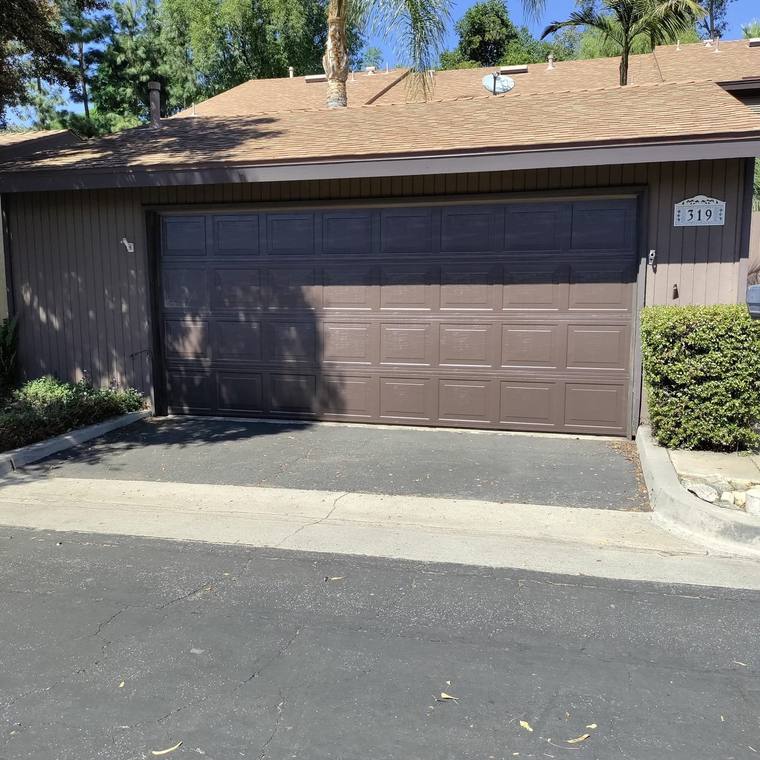
In a California HOA, you generally need written approval from the architectural committee or the board before you replace a garage door or change its color, style, windows or material. In many communities that applies even when the new door looks like the old one. The rules come from your CC&Rs and design guidelines, and a state law, the Davis-Stirling Act, limits how they are used. The review must be fair and reasonable, the decision must be in writing, and a denial must explain why and how to ask the board to reconsider. Many communities also require garage doors to be kept closed and kept in good repair. Before an association can fine you, it must give you written notice of a hearing and a chance to fix the problem first. Get approval in writing before you order, because a new door is usually built to order. This is general information, not legal advice.
Call (951) 232-9778 Monday–Saturday, 8am–6pm · Closed Sunday
What this guide covers
This page covers HOA approval and HOA rules. Permits, materials and door sizes have their own guides, linked where they come up.
Start with the documents
An HOA’s power over your garage door comes from its own documents. Those documents work inside a state law called the Davis-Stirling Common Interest Development Act.
The Act begins at California Civil Code section 4000. It covers condominiums, planned developments, stock cooperatives and community apartment projects (section 4100). A single-family HOA neighborhood is usually a planned development, so the Act applies there too.
Section 4760 sets the basic rule. Any change to the outside appearance of your home must follow your governing documents and the law.
The covenants, conditions and restrictions (the law calls them the declaration) are recorded against your property. They usually say which outside changes need approval, whether garage doors must stay closed, and who maintains what.
These hold the details: approved colors, door styles, window patterns. Boards often adopt them as operating rules. An operating rule has to be in writing, within the board’s authority, consistent with the CC&Rs and bylaws, and reasonable (section 4350).
The board can’t change architectural standards overnight. It must give members notice of a proposed change at least 28 days ahead and consider their comments (sections 4355 and 4360).
State law beats all of them. The CC&Rs beat the articles and bylaws, and all of those beat the operating rules (section 4205). So a design guideline can’t take away something your CC&Rs allow.
Where approval is required, section 4765 sets the ground rules. The procedure must be fair, reasonable and quick, with prompt deadlines and a stated maximum time to respond. Decisions must be made in good faith, can’t be arbitrary, and can’t violate the law or the building code.
Every decision must be in writing. A denial must explain why and describe how to ask the board to reconsider. The association must also tell members each year which changes need approval.
The quickest place to find all this is your annual policy statement. It must summarize what needs approval, list any fine schedule, and describe the dispute process (section 5310).
Next step
Spec sheet, color name, window layout and size. We don’t order until you’re approved.
Three quick questions narrow it down before you talk to anyone.
(951) 232-9778Mon–Sat · 8am–6pmQuick answers
This is the usual pattern, not a ruling. The last column tells you where your own answer lives.
| The question | The usual answer | Where to check |
|---|---|---|
| Do I need approval for a like-for-like door? | Often, yes. Many documents require approval for any outside change, even a matching door. Some guidelines exempt an exact match. | The architectural section of the CC&Rs, and the approval summary in the annual policy statement. |
| Can they choose my color? | Usually. Many communities keep an approved palette, sometimes assigned house by house to go with the body and trim. | The color schedule in the design guidelines. |
| Can they require a style? | Yes, if the guidelines say so. Rules may name flat, raised or carriage-house panels. Attached homes may have to match the building. | The garage door section of the guidelines. |
| Windows and decorative hardware? | Often regulated: whether windows are allowed, where they go, the pattern, and sometimes decorative handles and hinges. | The window section of the guidelines. Show both on your spec sheet. |
| Can they limit the material? | Some do. A community might allow woodgrain-look steel but not a full-view glass door. | The materials list in the guidelines. |
| Can they make me keep it closed? | Yes, if the CC&Rs or a valid rule say so. It’s a common rule, and the wording varies. | The use restrictions in the CC&Rs and the community rules. |
| Can they make me fix a worn or dented door? | Generally yes, if your documents require owners to keep the outside of the home in good repair. | The maintenance section of the CC&Rs. |
| Who pays in a condo or townhome? | Your declaration decides. If it’s silent, a state-law default applies. More on that below. | The declaration and the unit boundaries on the condo plan. |
Which material and insulation suit your part of the county is a separate question. The climate guide covers it.

Before anything is ordered
An incomplete application is the easiest delay to avoid. Send the committee everything the first time, and get the answer in writing.
Change the color, the windows or the model after approval, and the approval may not cover it. Send the change to the committee before the order goes in.
HOA approval is separate from a building permit: the HOA decides how the door looks, and your city or the county decides whether the work needs a permit. The permit guide shows who to ask.
Need the spec sheet for your committee?
We measure for free and give you the model, color and window details they ask for. Nothing is ordered until you’re approved in writing.
The rule people get cited for
It’s an easy rule to break by accident. State law sets the steps before any fine.
Many CC&Rs and community rules say garage doors must stay closed except when in use. The usual reasons are looks and security. An open garage shows its contents to the street.
The details vary. Some rules allow the door open while you’re working in the garage or driveway. Some also require the garage to stay usable for parking. Read the exact wording, because that’s what gets enforced.
If the door gets left open by accident, many current openers can close it after a delay you set, or tell your phone it’s open.
Written notice at least 10 days before the hearing (Civil Code section 5855). It must give the date, time and place, describe the violation, and say you can attend and speak. You can ask for a private hearing, called executive session.
A chance to fix it first. Since June 30, 2025, if you cure the violation before the meeting, the board can’t impose discipline. If the fix would take longer than the time before the meeting, a financial commitment to fix it also stops discipline. The law doesn’t define that, so ask the board in writing what it will accept.
A written decision within 14 days if the board does impose discipline. Discipline that skips these steps is not effective against you.
A fine must be reasonable. It can’t exceed the schedule of penalties the association distributes in its annual policy statement (section 5850). Since June 30, 2025, state law also caps most fines per violation. A bigger fine needs a health or safety risk and a written board finding at an open meeting. Late charges and interest on fines are not allowed.
And a fine can’t be turned into an assessment lien that the association enforces by selling your home (section 5725).
Maintenance notices
It turns on the maintenance clause in your CC&Rs. Here are four common situations.
A worn finish on a sound door is a looks problem, not a safety one, but it can still break a maintenance clause.
Refinishing may need approval if the color changes. A tired finish on a steel door rarely means the door is done.
Usually fixable without a new door. Ask the committee in writing whether refinishing in the approved color will close the notice.
One section can often be replaced, but only if that exact design is still made and the color still matches. Section replacement explains how that is judged.
In an HOA there’s an extra test: a section that doesn’t match may draw its own notice.
Match first, then decide. If the match is doubtful, ask the committee before choosing a one-section repair.
Your declaration decides first. If it’s silent, exterior doors that serve one home but sit outside its boundary are exclusive use common area (Civil Code section 4145). The owner maintains those, and the association repairs and replaces them (section 4775).
If the door is inside your unit’s boundary, it’s all yours. The law doesn’t say where maintenance ends and repair begins on a garage door.
Ask before you book work. Get the association’s answer in writing, especially for springs or a whole new door.
A door that won’t close can break a keep-it-closed rule, and it’s a security problem tonight.
Don’t pull the emergency release with the door open unless you’re sure the springs are intact and someone is holding the door. With a broken spring, it can drop hard.
Get it repaired, then tell the HOA. Keep the invoice. If a hearing is set, fixing the door before the meeting means the board can’t impose discipline for it. Emergency repair covers doors that won’t close.
Riverside County
Many newer communities across the county are governed by HOAs. Three local situations change the advice.
Newer tracts in places like Eastvale, Corona, Menifee, Temecula and Murrieta often have HOAs. Some have a master association and a neighborhood association, each with its own guidelines. Check whether you need sign-off from both.
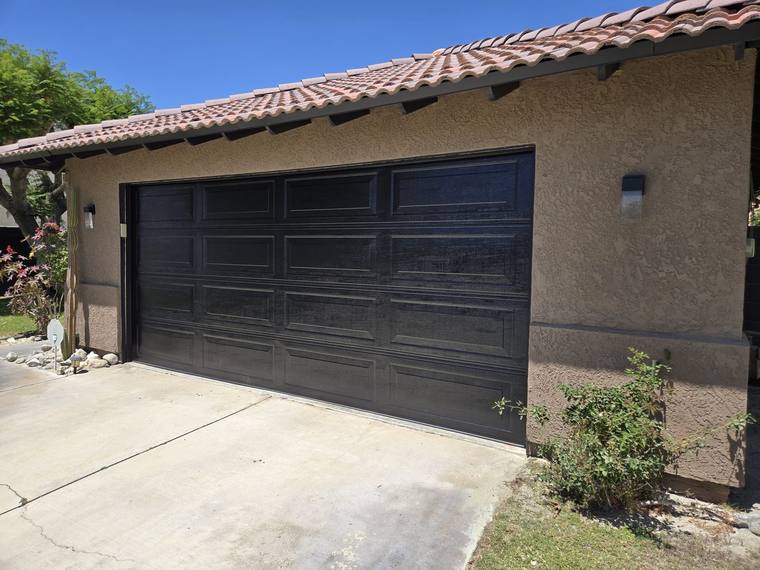
Many desert country-club and gated communities have their own architectural standards. A gated entry also means the installer has to be on the gate list. Dark finishes tend to fade faster in full desert sun, so a dark door may need refinishing sooner to stay within the rules.
In the foothills and mountains, wildfire is the real risk. Since January 1, 2026, Civil Code section 4766 sets deadlines for reviewing a substantially similar rebuild after a declared disaster. The HOA has 30 days to say whether the application is complete. It then has 45 days to approve it or send back a full list of changes.
Your options
Many garage door disputes end with a revised application or a conversation. The law gives you several steps before anyone goes to court.
Ask for reconsideration. If a committee turned you down, you’re entitled to have the board reconsider at an open board meeting (section 4765). That doesn’t apply when the board itself decided at a properly held meeting.
Or fix the one thing they objected to. The denial has to say why. If the problem was the window pattern or the shade, a revised application is often the fastest route.
Request internal dispute resolution. Every association must have a fair, reasonable and quick process for disputes with members (sections 5900 to 5920). You start it in writing. When a member asks, the association must take part, and you can’t be charged a fee. With no process of its own, the default is a meet-and-confer with a director the board picks. A signed agreement that doesn’t conflict with the law or your documents is binding.
After a fine hearing, if you and the board still disagree, section 5855 specifically gives you the right to ask for this process.
Try mediation before court. For many lawsuits over the governing documents, both sides must first try alternative dispute resolution, such as mediation (section 5930). Small claims is excluded.
Know when to call a lawyer. Talk to a lawyer who handles California HOA law if fines keep building, the association threatens to sue, you’re selling with an open violation, or the fight is about who owns the door. This page is general information, not legal advice.
Questions
Six common questions, answered for California.
Call and ask. There’s no charge for a question, and Beau has been doing this since 1996.
(951) 232-9778Mon–Sat 8am–6pmIt can require you to keep the door in good repair if your CC&Rs give it that power, and many do. That usually means repairing or refinishing, not necessarily a new door.
A new door comes into it when the old one can’t be brought back to a condition the rules accept. Before any fine, you must get written notice, a hearing and a chance to fix it first.
Often, yes. Many CC&Rs require approval for any change to the outside of the house, and a new door counts even if it looks the same. Some guidelines exempt an exact match, but only your own documents can tell you.
Sending the spec sheet costs a little time. Skipping it can cost you a door the committee later rejects.
Yes, if the CC&Rs or a valid community rule say so, and it’s a common rule. Associations usually point to appearance and security. Some rules allow the door open while you’re working in the garage or driveway, so read the exact wording.
If you’re cited, the board still has to give you notice, a hearing and a chance to fix it before it can fine you.
There’s no single statewide deadline for an ordinary application. Civil Code section 4765 requires your association’s procedure to set prompt deadlines and state the maximum time for a response. Find that number, and follow up in writing once it passes.
The exception with fixed deadlines is a substantially similar rebuild after a declared disaster, under section 4766.
No. Civil Code section 5855 requires written notice at least 10 days before the board meets to consider discipline, and you can attend and speak. You must get a chance to fix the problem before that meeting. If you do, the board can’t impose discipline.
Any fine must also be reasonable and within the schedule the association has distributed.
Usually not without approval. Many associations control color, often through an approved palette. Even a color from that palette may need a request, because some communities pre-approve palette colors and some don’t.
Ask before you paint. And ask whoever supplied the door whether painting its factory finish affects the warranty.
Further reading
HOA approval and a building permit are two different things. Who issues permits for your address, and what generally needs one.
The permit guideWhen a dented section can be swapped on its own, and when a new door is the better call.
Section replacementWhat a full replacement involves, from the measure to hauling the old door away.
The replacement pageOn an HOA job
We measure the opening for free and help you choose a door that fits both the opening and your guidelines. Then we give you what committees usually ask for: the spec sheet for the exact model, the color name, the window layout and the door size.
Our practice is simple: we don’t order a door until you have approval in writing. If the committee asks for a change, we revise the spec and you resubmit.
Working against a notice or a hearing date? Tell us when you call, and we’ll put the scope of work in writing so you have something to show the board. You get a flat quote before any work starts.
We don’t argue with your association for you, and we don’t give legal advice. We make sure the door you submitted is the door that goes up. We cover all of Riverside County.
Tell us your community and what your guidelines say about color and style. We’ll measure for free, give you the spec sheet and color details to submit, and won’t order until you have approval in writing.
Riverside Classic Garage Doors · 6410 Industrial Ave #3, Riverside, CA 92504 · (951) 232-9778 · Monday–Saturday, 8am–6pm · Closed Sunday